


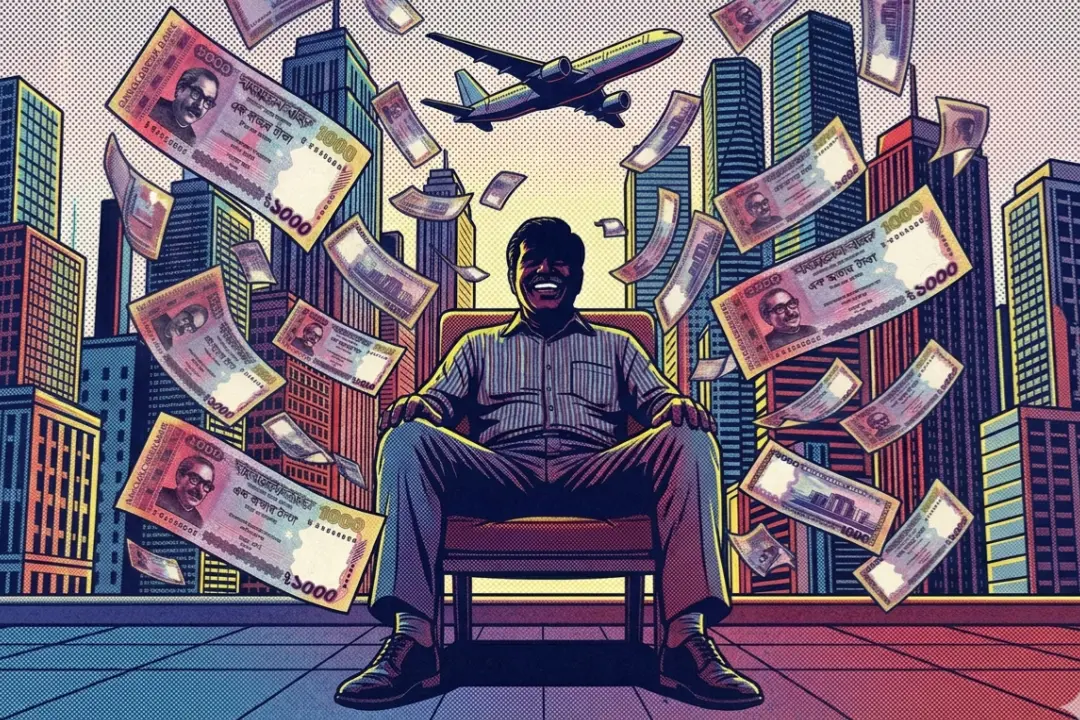
A Long Rope for the Big Fish
The government and the central bank are trying a special way to solve the crisis. They call it rescheduling and restructuring. It sounds fancy. Really, it just gives more time to those who do not pay. Some big borrowers now get 15 years to pay back their debt. They only need to pay 1% or 2% as a down payment. They even get a one year grace period where they pay nothing. Bankers say this is to keep the economy moving and factories open. But experts say this is not a real solution. It just hides the bad loans on paper for a while. The real test will come in 2027 when they must start paying again.
The Magic Trick: Now You See the Money, Now You Don’t
Many big groups like S Alam, Beximco, and others stopped paying after the government changed. For 15 years, many bad loans were hidden using various techniques. Now, the true picture is coming out because of new rules and foreign audits. Bankers are worried. They want the government to ban these defaulters from traveling abroad. They even want to publish their names and photos in the news to shame them. There are many stories of fraud and corruption in the banking sector. These billionaires often use their power to keep their loans looking regular without paying a cent.
Big Loans, Big Interest, and Very Little Watching
Banks love big businesses because the loan amounts are huge. The default rate for loans over Tk 1 crore has jumped to over 31% in a single year. According to the central bank, the total amount of defaulted loans on accounts with loans exceeding Tk1 crore stood at about Tk554,486 crore at the end of the December quarter of 2025. Banks are now asking for better ways to monitor the money. They want a database for personal assets, just like the one for bank loans. They also want to check if the land used for security is actually real. For a long time, the profiling was weak. Huge loans were given to the same big groups. Now, banks are asking for separate courts to deal with the top 10 defaulters of each bank. They want to catch them and even put them in jail for up to seven years.
The Bill Comes to Us: Pay Up, Common Man!
We are the ones who pay for these Bad Boy Billionaires. When they don’t pay, the banks face a “provision shortfall” of over Tk 1.91 lakh crore. This is a massive hole in the safety net of our banks. The total volume of defaulted loans reached a historic high of 36% last year. To fix this, the government often uses tax money or cuts the interest we earn on our savings. While the big fish enjoy 15 year payment plans and grace periods, the common man sees his hard earned money used to fill the gaps. The “Bad Boys” get the billions, and we get the bill.

In our banks, a common pen is tied to the desk with a heavy rope. But for a billionaire, the bank doors swing wide open. Big groups like S Alam and Beximco walked away with massive amounts of money. When they stopped paying, they did not face any real consequences. Instead, they were given a 15 year restructuring plan. They only had to pay a tiny 1% or 2% down payment to stay in the game. They even received a one year grace period where they pay nothing at all.
Bankers are finally demanding that these business owners face the music. They want to ban these “big fish” from traveling abroad. They want to publish their names and photos in the newspaper to shame them. There is even a proposal to increase jail time to seven years for these massive defaults. Experts say easy deals are not a real solution. It is time for these billionaires to be responsible for their own consequences.
In a bank, even a cheap pen is tied to the desk with a heavy rope. They don’t trust you with a small pen. Yet, they gave billions to “Bad Boy Billionaires” who siphoned the money abroad. Think about it.
– Opinion | Daily ScrollDown
In our last article, we pressed that bad loans would hit 6 lakh crore. We were right. It is time to stop this cycle. We must support the call for travel bans on big defaulters. We need to see their names and photos published for everyone to see. Our tax money should not be used to fill their “provision shortfalls”.