


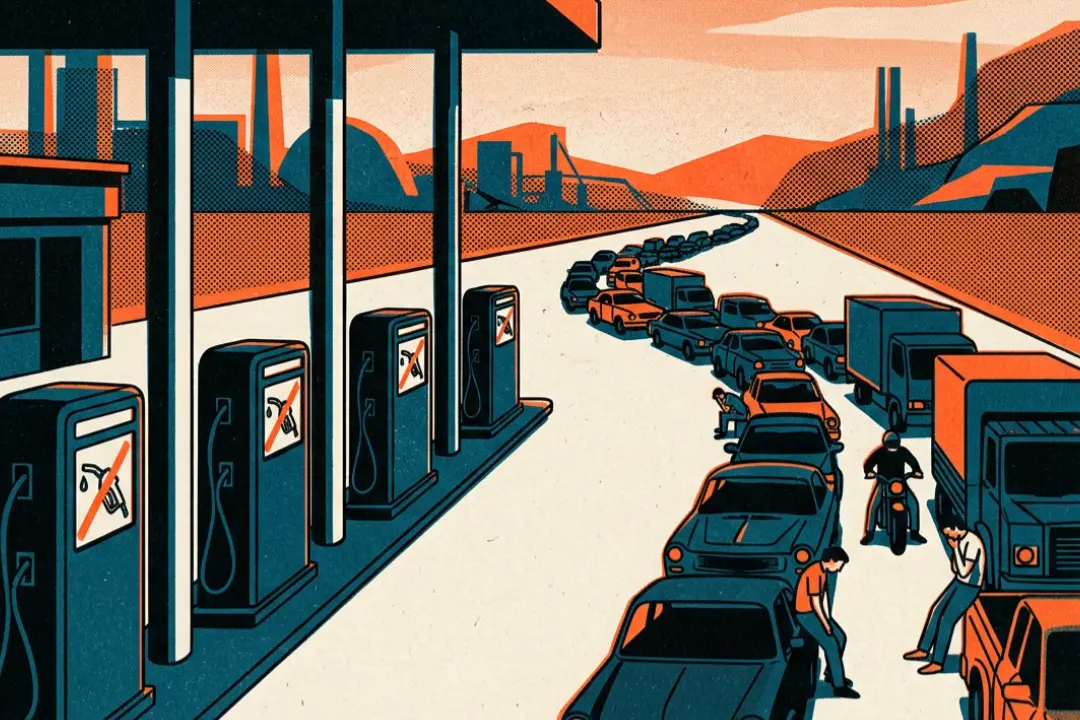
Is Panic Buying the Only Culprit Behind These Miles of Queues?
Panic buying happens when people buy fuel out of fear. They worry the supply will run out soon. People with half-full tanks are joining the long lines. They want to be safe rather than sorry. However, fear is not the only reason for the queues. Actual supply has dropped at many stations. Some pumps now receive 40,000 liters instead of 52,000 liters. This makes the wait much longer.
The government’s rationing system also forces people to wait more often. Motorcyclists are sometimes limited to only 200 taka worth of fuel. This small amount lasts only two or three days. Because of this, they must return to the lines frequently. Many filling stations are also closed. This forces all the vehicles to crowd the few stations that remain open.
If the Government Claims the Tanks are Full, Why are the Pumps Running Dry?
The government claims there is enough fuel until May. They are importing more from places like Singapore at high prices. Yet, the reality on the street is different. Drivers find many pumps with No Fuel signs. Some wait for five hours only to be disappointed. This creates a major lack of trust.
People believe pump owners are creating an artificial crisis. They suspect a syndicate is hiding fuel to raise prices. Black marketeers are also disrupting the supply. They store fuel illegally to sell it later for more money. When people see empty stations, they do not believe the government’s promises. They rush to every station they see out of pure desperation.
Can Our Local Fuel Production Save Us From This Sinking Ship?
Bangladesh does produce some fuel locally. We use condensate from our own gas fields. This helps us produce petrol and some octane. In fact, the country does not need to import petrol at all. Local production meets almost all of our petrol needs. This is a small relief during the crisis.
However, this is not enough to solve everything. We only produce about 25% to 38% of the octane we need. Most importantly, we produce almost no diesel. Diesel is the most important fuel for our trucks and farms. Experts say we must still import octane and diesel to keep the country moving. Local production helps, but it cannot stop a total crisis.
How Deep Will the Economic Grave Go?
The economic impact of this crisis could be catastrophic. Bangladesh relies on fossil fuels for 98% of its energy. A total fuel depletion would cause a national blackout. Renewable energy like solar and wind is less than 2% of our mix. The garment industry is the backbone of our economy. It would stop without gas or diesel. This would lead to mass unemployment.
Our foreign exchange reserves would also collapse. Agriculture would be hit very hard too. Over 2.1 million machines need diesel for irrigation. Without diesel, the rice harvest will fail. This would create an immediate food crisis. Prices for everything would skyrocket. The whole country would face extreme poverty and social unrest.

Everyone is buying out of panic because they see empty stations. Bikers and transport workers are desperate. The Middle East war is a huge problem. But local opportunists make it much worse. They are like a plague on a struggling body. They store fuel illegally to profit from our pain. The government has even offered 100,000 taka to anyone who reports these hoarders.
It feels like this country never finds peace. One day it is an internet shutdown. The next day it is mob lynching or violent protests. Now we have this fuel crisis. As Franz Kafka once suggested, “There is an infinite amount of hope in the universe… but not for us.” We seem trapped in a loop where one crisis ends and another begins. We are waiting for a dawn that feels further away with every empty tank.
– Opinion | Daily ScrollDown