


A King’s Tax Hack Turned into a Carnival
The Bengali calendar did not start for fun. It started for money. Mughal Emperor Akbar needed a better way to collect taxes. The old lunar calendar did not match the harvest time. Farmers found it hard to pay taxes out of season. Akbar asked a scholar named Fatehullah Shirazi to fix this. They made a new solar calendar called Bangabda. Farmers paid their debts on the last day of the year. The next day was Pohela Boishakh. Landlords gave out sweets to celebrate. Businessmen opened new account books called Halkhata.
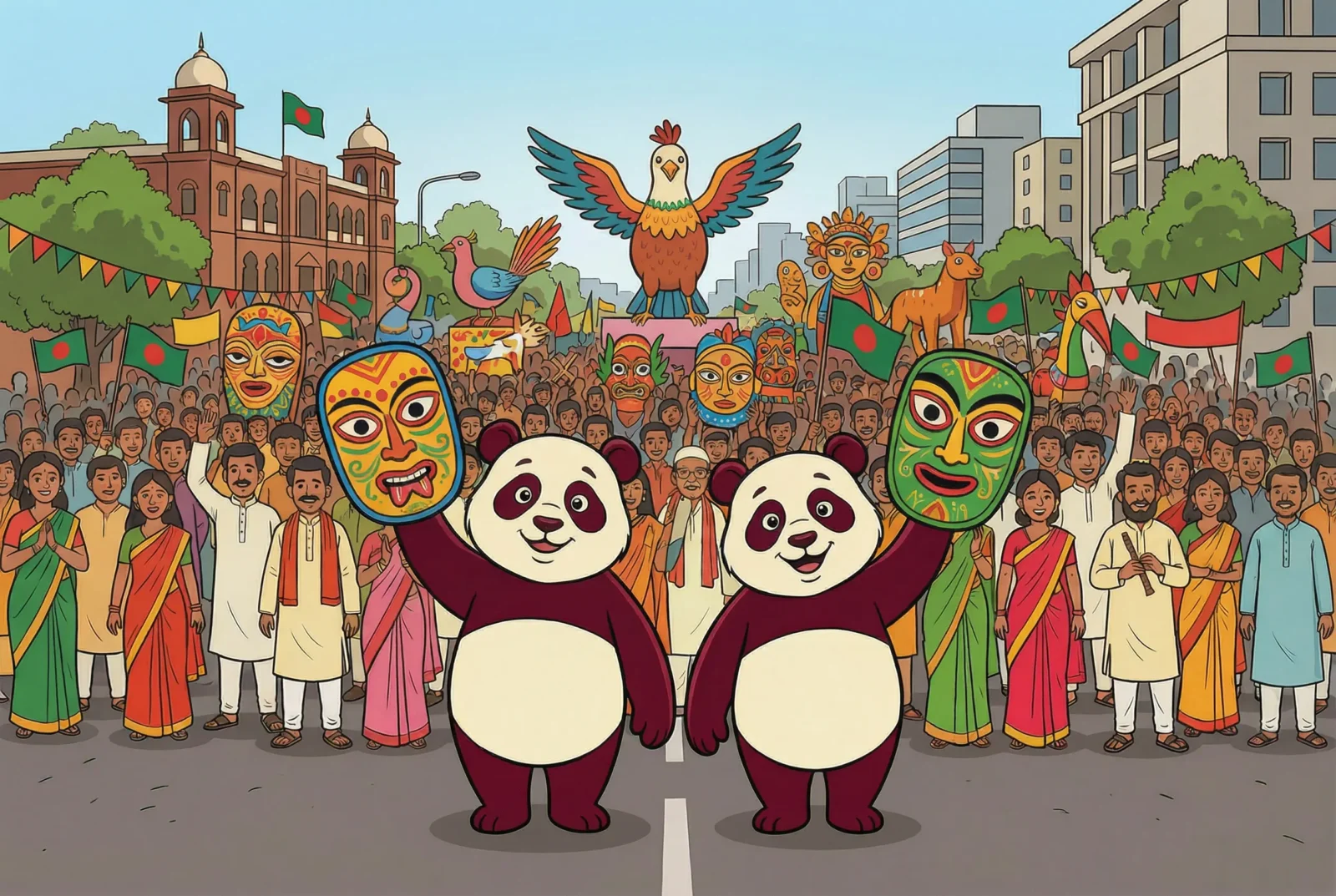
Much later, culture became a shield. In 1967, Chhayanaut started the music at Ramna Batamul. They did this to protest against Pakistani bans on Bengali songs. The Mongol Shobhajatra started in Jessore in 1985. It moved to Dhaka in 1989. Now it is a world heritage recognized by UNESCO. This march uses big masks to show our folk roots.
Money Talks, and it Speaks Bengali
This festival is a giant engine for the micro-economy. Experts say the business is worth about 20,000 crore Taka. It helps small artisans and big companies. Clothing is the biggest part of the pie. People buy many new sarees and panjabis. About 25% of annual fashion sales happen now. Many shops in Keraniganj sell millions of Taka worth of clothes every day.
Small crafts also get a big boost. Artisans sell clay toys and bamboo flutes. They sell bead necklaces and glass bangles. These items move from rural fairs to posh city shops. Food is another big winner. Sweet shops are packed with people. Flowers are in high demand. The flower market aims for 60-70 crore Taka in sales. Government employees also get over 317 crore Taka in bonuses.
Finding Our Roots Before the Concrete Eats Them
Pohela Boishakh is our cultural compass. It tells us we are Bengali first. It is the only major festival named after a region and a people. Without these roots, we would lose our story. The festival brings back folk songs like Baul and Bhatiali. These songs are the heartbeat of our villages.
In the 1960s, this day helped us fight for our identity. It was a shield against people who wanted to erase our songs. Today, it brings the city and the village together. It reminds us of our history of farming. If we lose this core, we lose our togetherness. We become a group of people with no past.
Politics on the Plate: Culture vs. Chaos
Pohela Boishakh has a long history of being used as a political shield. In the 1960s, it became a key part of the Bengali nationalism movement. Groups like Chhayanaut used music in 1967 to protest against Pakistani bans on our songs. Even the names of the famous street parade have changed based on who is in power. Recently, the name was changed to Boishakhi Shovajatra to help everyone feel united.

Pohela Boishakh has a long history of being used as a political shield. In the 1960s, it became a key part of the Bengali nationalism movement. Groups like Chhayanaut used music in 1967 to protest against Pakistani bans on our songs. Even the names of the famous street parade have changed based on who is in power. Recently, the name was changed to Boishakhi Shovajatra to help everyone feel united.
“Culture never fades – it transforms into memories, celebrations, and the beauty of togetherness that defines tradition” – Hello Swanky
– Opinion | Daily ScrollDown