


Will the farmer’s dry land survive the empty talk of old men?
Farmers in Bangladesh are in a desperate state. They wait hours for only five litres of fuel. Many return home with empty hands. They must work in the dark of night to irrigate their fields. The land is drying up. Irrigation costs have jumped from Tk1,200 to Tk2,000. Farmers fear their crops will fail soon.. This crisis feels worse than the pandemic.
Can our garment factories run on high costs and no power?
The garment sector is the backbone of the economy. Five million people work here. Most of them are women. Now they face constant load shedding. Production plans are falling behind. Factories cannot ship goods on time. Foreign buyers may cancel their orders. Workers worry they cannot pay rent. They struggle to buy food.
Who truly wins when a bottle of oil costs a full day’s work?
Prices for daily goods are rising very fast. Cooking oil is up by Tk20 per litre. Flour costs much more now. Beef prices have reached Tk850 per kg. People are losing their power to buy things. Rickshaw pullers find fewer passengers. Markets are closing early to save power. Even the streets of Dhaka are empty.
Is the global trade route just one closed gate away from failure?
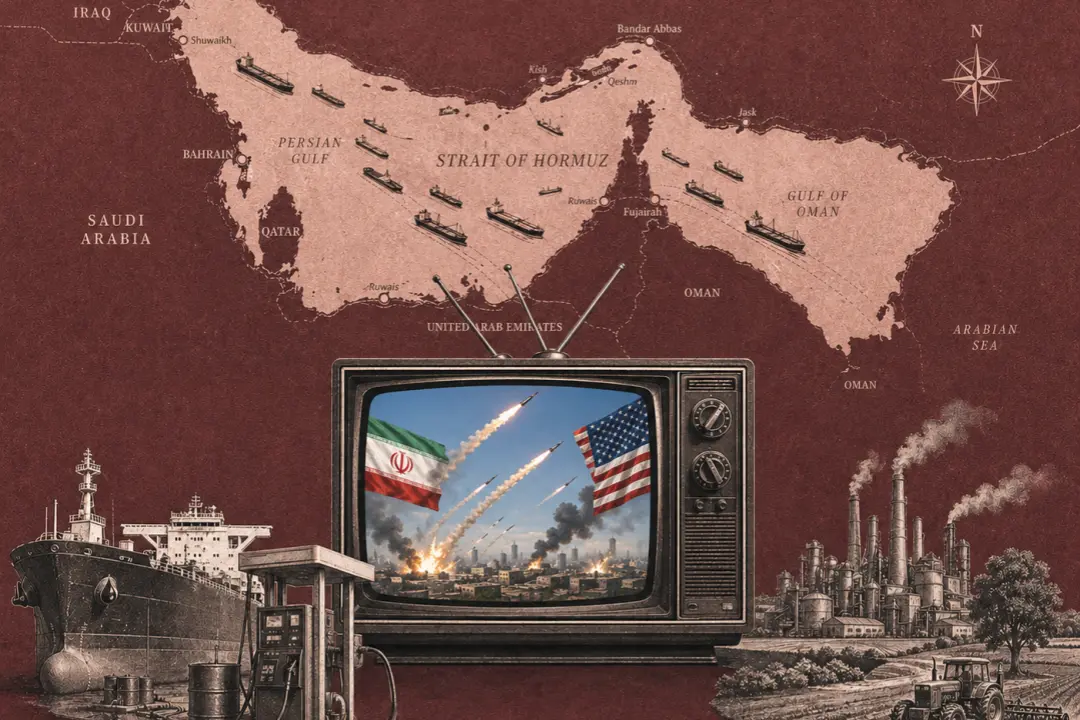
The war has closed the Strait of Hormuz. This route carries 20% of the world’s energy. Shipping costs have risen by 25%. Insurance for ships is very expensive now. Asia relies heavily on Gulf oil and gas. Exports from Bangladesh could drop by 6%. The global supply chain is in shock. Many fear a global recession is coming.

What war does to mankind and the economy? War destroys the stability of human life. It takes away the fuel needed for food. It breaks the links between nations. The world is suffering because energy prices are too high. Global growth is slowing down. Many people are falling into poverty.
The Iran-US conflict has hit Bangladesh hard. The country could lose 3% of its total GDP. Remittances from workers in the Gulf are falling. Foreign currency is becoming scarce.
The geopolitical One Battle After Another has finally reached the kitchen markets of Dhaka. We are witnessing the brutal mechanics of a globalized world: a missile fired thousands of miles away can somehow stall a tractor in Faridpur and increase the price of a watermelon in Karwan Bazar.
1. The Ghost Town Economy
Dhaka’s streets are empty, but not for a festival. Rickshaw pullers are sleeping on their seats because the bus-to-rickshaw pipeline has dried up. When the fuel stops, the city stops. We are seeing an “Eid-like” silence, but without the joy or the remittances.
2. The Inflationary Ripple
Transport: Truck fares from the south have jumped from Tk 15,000 to Tk 20,000.
Protein: Chicken and beef are becoming luxury items as transport costs add a war tax of Tk 100–150 per kg.
Agriculture: Farmers are missing the jute sowing season because diesel is scarce. If the irrigation pumps don’t turn on, the “Trillion-Dollar Dream” might literally wither in the fields.
3. The Pen vs. The Pump
While officials discuss macro-stability and My Pen, My Rule exchange rates, the street vendor is losing their peak evening hours to a 7 PM or 8 PM curtain call. The marginalized aren’t just hit harder—they are being erased from the economy.
This is what war does to mankind and the economy?
– Opinion | Daily ScrollDown