


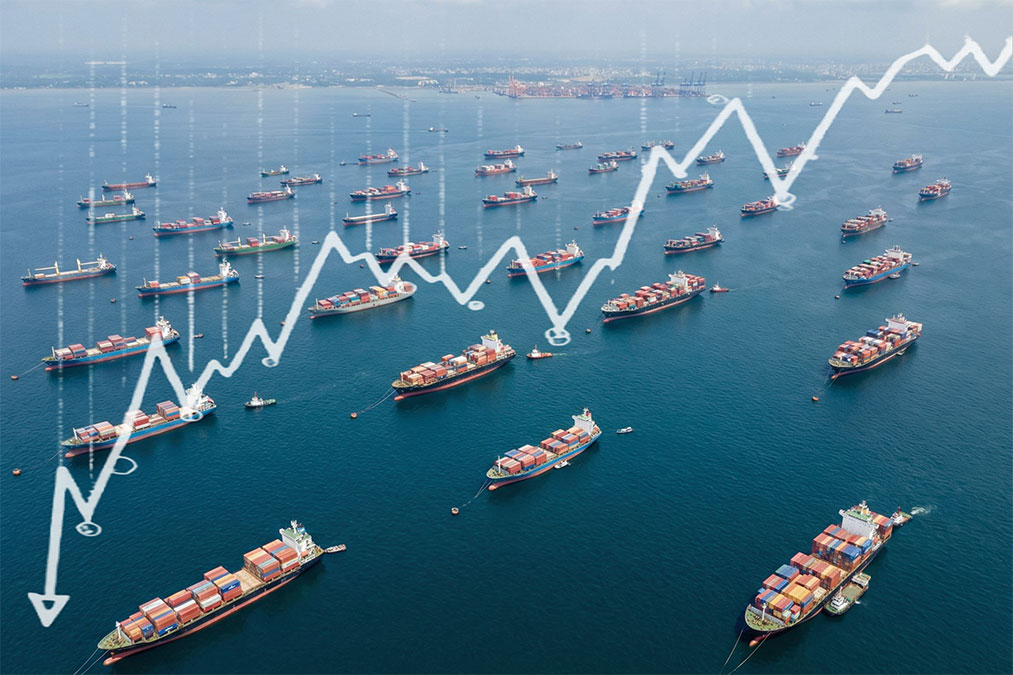
A large volume of essential goods is stuck near Chattogram port as unloading slows down. This year, imports before Ramadan broke past records. The sudden surge has put heavy pressure on transport, storage, and river logistics.
Port data shows 46 ships carrying about 2.346 million tons of essential goods at the outer anchorage. Last year at the same time, there were only 26 ships with about 1.2 million tons. So both ship numbers and cargo almost doubled. Around 1.05 million tons have been unloaded so far, while nearly 1.3 million tons are still waiting.
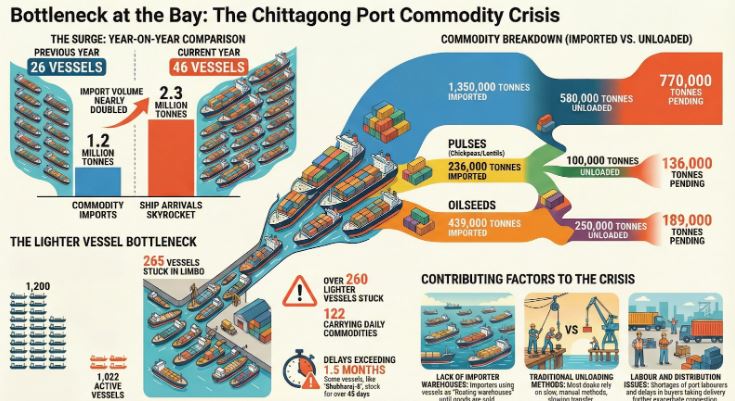
Wheat imports are the highest. Twenty five ships brought about 1.35 million tons of wheat. Pulses and oilseeds also arrived in large amounts. Every day, about 50,000 to 60,000 tons are moved from big ships to smaller lighter vessels. These vessels carry goods through rivers to Dhaka, Barishal, Khulna, and other regions.
The main problem is a shortage of lighter vessels and storage space. The number of registered lighter ships has dropped from about 1,200 to around 1,022. At least 265 lighter vessels are stuck at different river terminals for 10 days to one and a half months. Many importers do not have their own warehouses. Goods cannot be unloaded quickly after reaching the terminals. Some places also face labor shortages and still use slow manual systems.
Large industrial groups with their own ships and modern unloading facilities are facing fewer delays. Smaller importers are struggling more. On one recent day, 24 large cargo ships could not get any lighter vessel allocation.
Authorities say imports increased but logistics capacity did not. They are urging importers to unload goods faster to reduce congestion and bring the supply chain back to normal.

Chittagong Port Crisis: Why Your Groceries Might Get Expensive
The Big Jam: at Sea Chittagong Port is facing a massive logjam. Right now, 46 big ships are floating at sea with 2.3 million tons of essential goods. This is double the amount from last year. These ships carry wheat, oilseeds, and pulses.
The Lighter Vessel Shortage: To get goods to land, smaller ships called lighter vessels are used. There is a major shortage of these vessels. The number of active lighter ships has dropped from 1,200 to 1,022.
Breaking the Rules: There is a rule for these ships. Once a lighter vessel is loaded, it should not wait for more than three days. However, some ships have been stuck for over a month. One ship has been floating with wheat for 34 days because the owner has not unloaded it.
Why is this happening? Many business owners are holding onto these ships for too long. Here is why:
- No Warehouses: Many new importers do not have their own godowns or stores.
- Floating Stores: They use the ships as temporary storage until they find a buyer.
- Labor Shortage: There are not enough workers at the river ghats to unload the goods.
- Slow Methods: Many ports still use old, slow ways to move products.
The Risk to You: When lighter ships are held back, big ships cannot be emptied. This breaks the supply chain. If goods do not reach the market on time, it creates an artificial crisis. This can make the price of food skyrocket right before Ramadan.
Authorities are Taking Action: The Port Authority is now fighting back. Magistrates are conducting raids on the river. They recently fined nine ships a total of 2.2 lakh Taka for staying too long. They are telling importers to unload goods immediately to keep prices stable.
– Opinion | Daily ScrollDown