


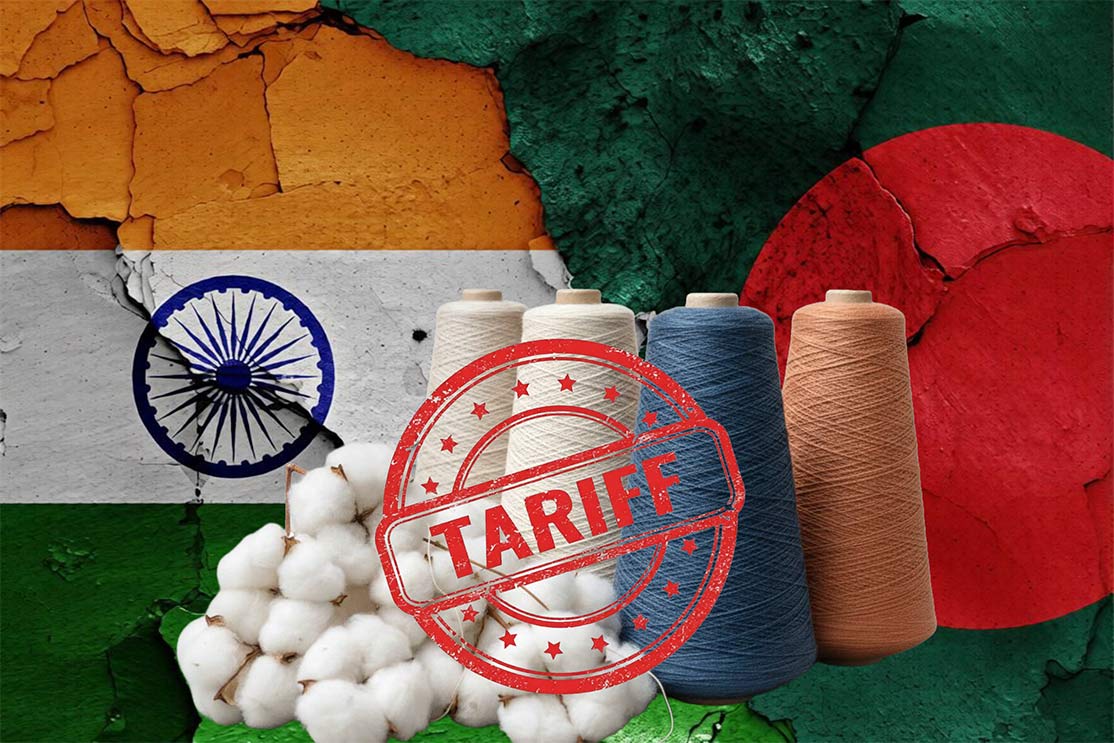
The government curbed duty free Indian yarn after local mill pressure. Now exporters warn of higher costs. Textile sector drives exports
Why did the government decide to remove the duty-free “bonded warehouse” facility for Indian yarn?
The government wants to protect local spinning mills from what they call “unfair competition”. Local mill owners claim that Indian yarn is being sold at prices lower than the cost of production. They argue this puts local mills at risk of “extinction”. Currently, domestic mills are sitting on unsold yarn stocks worth over 120 billion taka.
Why are the garment export associations (BGMEA and BKMEA) demanding that the government keep the duty-free imports?
These groups warn that removing the facility will push the garment industry into a crisis. They argue that local yarn is often more expensive and has inconsistent quality. Furthermore, many global brands specifically prefer or require Indian yarn for their orders. Higher costs would make it harder for Bangladesh to stay competitive.
Is this decision caused by the political shift that happened after August 5th?
Relations between the interim government and India have been strained since the former Prime Minister was ousted. In April 2025, India withdrew a key transshipment facility that allowed Bangladeshi cargo to move through Indian ports. However, local mill owners have also pressured the government by threatening an indefinite strike starting February 1st. They claim they can no longer pay back bank loans because of their losses.
How will this decision impact the textile and garment market?
Adding new duties of 10–20 percent could raise the total tax on yarn to nearly 40 percent. This would add about 60 cents per kilogram to the cost of raw materials. Higher costs may lead to delayed shipments and lost orders from global buyers. It would specifically hurt small and medium sized mills in northern Bangladesh that rely on cheaper yarn brought in by land.
How big is the textile industry, and how much does the economy depend on it?
The textile and garment industry is the primary “backbone” of the economy. It accounts for more than 80 percent of the country’s total exports and employs millions of people. The knitwear export sector alone, which relies heavily on this yarn, is worth about USD 28 billion.
What are the alternative options for Bangladesh to source cotton and yarn?
Brazil has already overtaken India as the largest source of raw cotton for Bangladesh. China remains the top supplier of finished fabrics. To support local mills without using tariffs, industry leaders suggest the government provide direct cash assistance, tax rebates, or low-interest loans. They also emphasize that the government must ensure a steady supply of gas and electricity to lower production costs.

Why Bangladesh Imports More Indian Yarn: Quality and Profits over Sentiment
The numbers for the 2024–25 fiscal year are clear. Bangladesh’s yarn imports from India reached 556.12 million kg, worth USD 1.79 billion. This is a 22.22 percent increase in volume and a 20.15 percent rise in value.
Some may find this surprising given the current political climate, but business follows a different logic. It is not about sentiment or narratives. It is about money and rational choices.
Why is this happening? The garment and textile sector is the backbone of Bangladesh’s economy. It makes up more than 80 percent of the country’s exports and employs millions of people. When these factories make a profit, they can pay salaries on time and create more jobs.
Quality is King. In recent meetings, garment leaders from BGMEA and BKMEA explained why they prefer imported yarn. It is not just about the lower price. It is also about quality. Global buyers want high quality products. Exporters say that local yarn is often more expensive and inconsistent in quality. Because global brands often prefer or specifically ask for Indian supplies, exporters must meet those demands to keep their business.
Better Solutions for Local Mills Instead of placing new taxes on imports, BGMEA and BKMEA suggested a different path. They believe the government should give direct cash assistance or incentives to local spinning mills if they are struggling. They also want the government to ensure a steady supply of gas and electricity to help local mills lower their costs.
By focusing on productivity instead of trade barriers, Bangladesh can keep its USD 28 billion knitwear sector competitive on the global stage.
– Opinion | Daily ScrollDown