


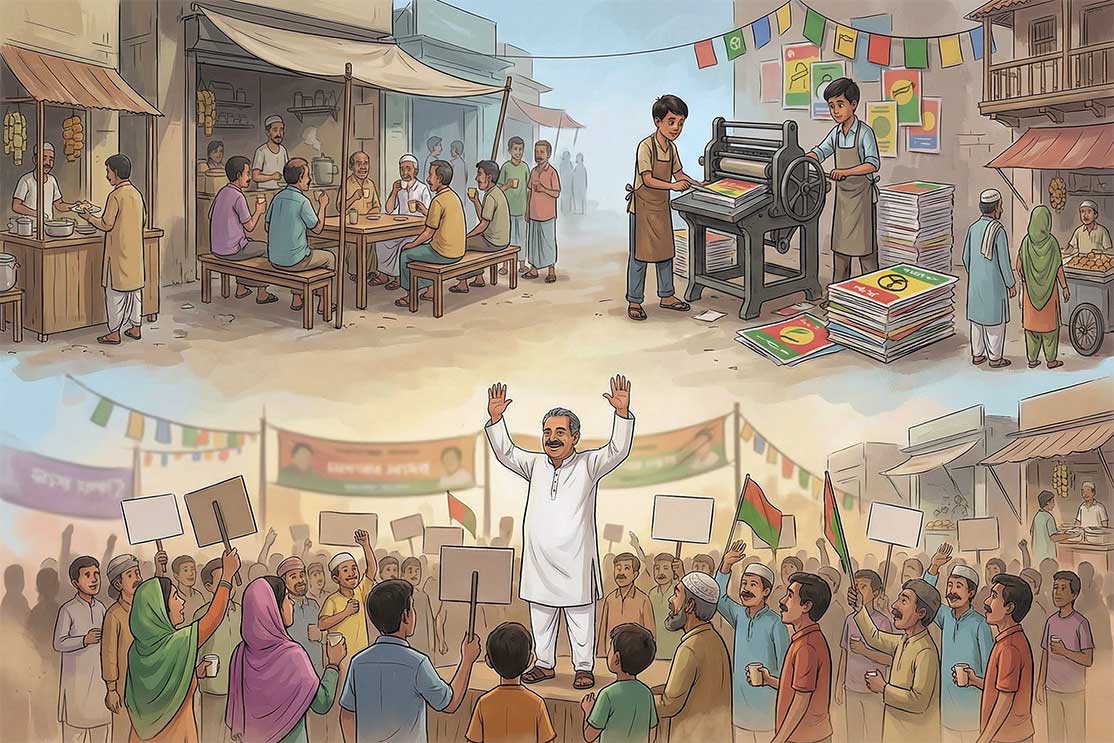
Elections create a brief money flow for small vendors, while many candidates spend far beyond legal limits in hidden ways
Microeconomics and GDP
The “micro-economy” of elections is a temporary period of high money circulation. This spending creates short-term economic activity and gives small businesses more chances to earn money. Khondaker Golam Moazzem from the CPD says this spending brings a “temporary buzz” to local economies.
Booming Local Businesses
Tea stalls and snack sellers see much higher sales during rallies. Demand for goods like tea, biscuits, and puffed rice rises by 20% to 25%. Hotels stay full because political activists travel from far away. Candidates also hire buses, rickshaws, and loud speakers to reach voters. This spending helps the economy because one person’s cost becomes another person’s income.
Shift to Digital Campaigning
Strict rules on posters and plastic banners have moved campaigning to the internet. Candidates now use Facebook, YouTube, and TikTok to reach people. Because of these new rules, the printing industry has suffered. Md Anwar Hossain of the Bangladesh Mudran Shilpa Samity said,
“The printing industry might make Tk 100 crore this year, compared to at least Tk 800 crore in past elections.”
Cloth Banners and Sourcing
Candidates are using cotton cloth banners instead of plastic to follow new guidelines. However, local vendors are losing out. In places like Cox’s Bazar, candidates are buying their cloth banners from Chattogram instead of using local shops.
New Jobs in Tech and Media
The shift to digital media has created new work opportunities. Candidates are now hiring professional photographers and videographers. They also pay social media content creators to manage their online presence and broadcast live events.
Spending Limits vs. Actual Costs
The law says candidates can only spend Tk 25 lakh or Tk 10 per voter. However, TIB found that average spending reached Tk 1.19 crore. This happens because much of the spending is “invisible” and not reported in official papers. Candidates spend extra money on things like payments to activists, donations, and “money and muscle power” to influence voters.
Temporary Economic Boost
The election creates a short-lived economic spike. Khondaker Golam Moazzem, Research Director at CPD, explains this boost:
“This is someone’s cost, but another’s income. It’s a real but fleeting boost, and one we still fail to regulate properly.”
Source: CPD, Daily Star, The Business Standard