


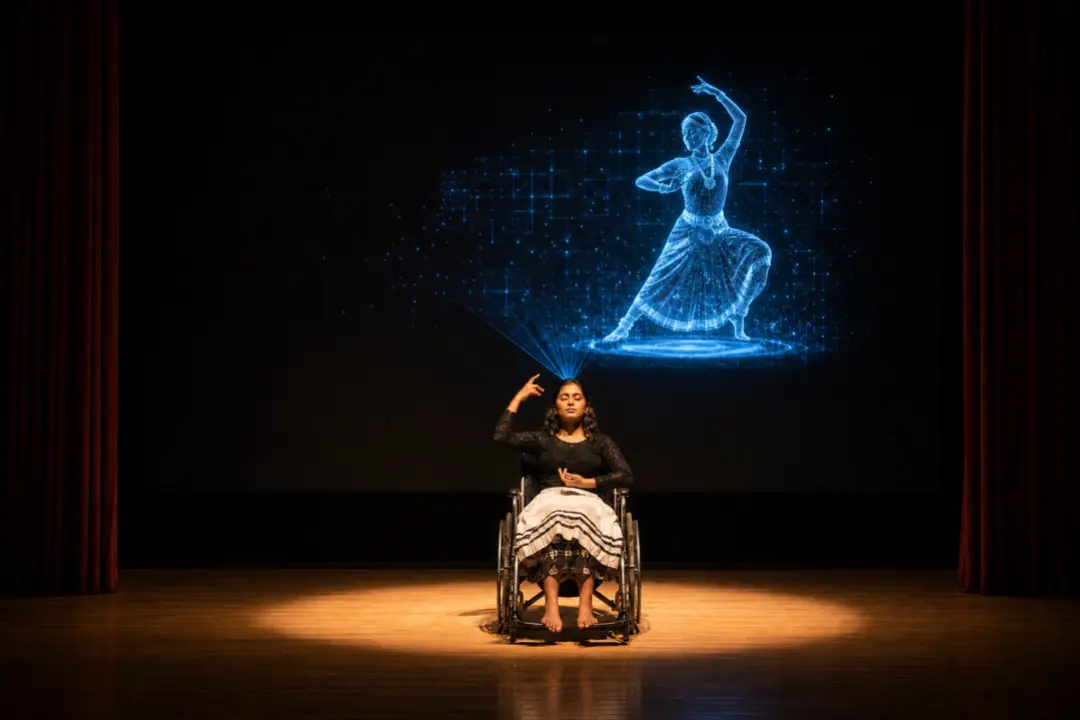
Ballerina Breanna Olson returns to the stage in Amsterdam. She uses an EEG headset to control a digital avatar with her thoughts.
The Digital Comeback
A ballerina named Breanna Olson performed live in Amsterdam. She has ALS, a common type of Motor Neurone Disease. This disease weakens muscles and stops people from moving. The performance happened at the OBA Theatre in December. It was the first show of its kind in the world. She used a digital avatar to dance again. It was a mixed-reality experience with other dancers. This project is called “Waves of Will”. It shows that the mind can still create art. It was a beautiful moment she will remember forever.
The Dream Team
Breanna Olson is the star of the show. She is a mother from Washington. She has lived with ALS for over two years. She has been a dancer since she was a child. Japanese tech firm Dentsu Lab led the work. They worked with a data company called NTT. They built the new brain-computer interface. Other tech giants like Neuralink are doing similar work. Even people like Yvonne Johnson use AI to find their identity. These teams want to help people with disabilities stay active in society.
Mind Over Matter
Breanna wears a special EEG headset. The headset has sensors to pick up brain signals. She does not move her body. She imagines specific dance moves in her head. The system captures these motor signals. The computer translates them into instructions. Her avatar dances in real-time on the stage. It is a very difficult task. She must focus inward and ignore all noise. She must isolate her muscles completely. This is how she bridges the gap between mind and digital form.
The Next Big Revolution
This tech can change many lives. It is not just for the arts. NTT says it could control wheelchairs or TV remotes. It helps people regain their sense of self. It lets people with MND participate in the world. This is a new way to express feelings. It shows that people with disabilities still have great value. They have wisdom and talents to share. Businesses can use this to tap into lost human capital. It provides hope for those with no cure. It moves the needle on how we treat chronic illness.
The Six Billion Dollar Dancer
The economic stakes are very high. MND will cost Australia 5.02 billion in 2025. This will rise to 7.51 billion by 2050. The average life expectancy is only 27 months. There is a big gap in how we pay for care. People under 65 get 302,000 from the NDIS. People over 65 only get 108,000. This is only 36% of the support younger people get. This funding gap is a major business problem. Business leaders must close this gap to save the economy and lives. This tech is currently very expensive and hard to get. We need a better plan for everyone.

Remember Tony Stark building the first suit in a cave? This real-life tech brings that exact same level of satisfaction. It proves that when human will meets cutting-edge innovation, the impossible becomes reality. The stage is set, the suits are real, and humanity just took the ultimate victory lap.
It reminds us that technology is at its best when it serves human determination turning pure willpower into a real life superpower.
– Opinion | Daily ScrollDown
References:
1. www.bbc.com
2. evohealth.com.au
*You may click on the references