


Bangladesh’s Backbone SMEs Struggle for Finance Despite Low Default and High GDP Contribution
The cottage, micro, small, and medium enterprise (CMSME) sector, long considered the backbone of Bangladesh’s economy, contributes significantly to employment and GDP. Currently, there are around 11.8 million CMSMEs, contributing roughly 25% to GDP.
Recently, the sector was renamed and expanded to include cottage (small-scale) and micro (ultra-small) enterprises. This allows smaller entrepreneurs to now access formal institutional loans, potentially improving their economic conditions.
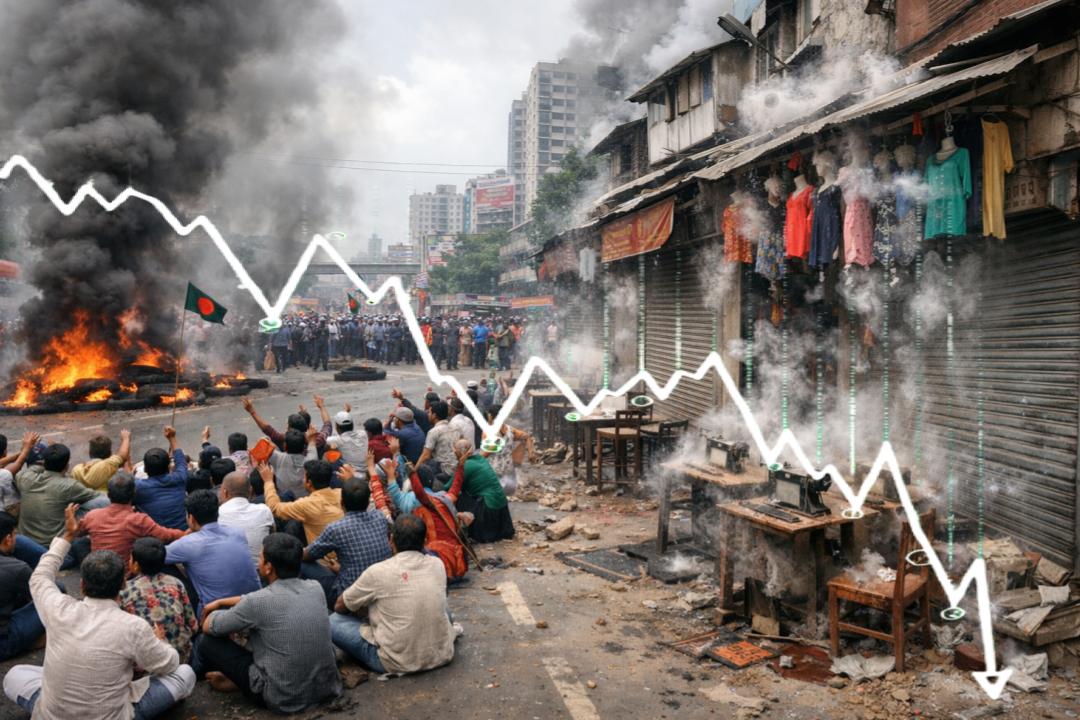
Following the political shift in August last year, businesses across the spectrum—from large corporations to SMEs—have been shrinking. As a result, bank lending to CMSMEs fell, accounting for 17% of total bank lending by June—the lowest in two years. Bangladesh Bank has instructed banks to increase lending to the sector.
Despite a low default culture, SMEs continue to face difficulties in accessing finance. Many entrepreneurs struggle to secure reasonable-term loans, prompting the SME Foundation to request a special allocation from the Finance Adviser.
To offset rising costs, Bangladesh Bank increased maximum loan limits:
- Cottage enterprises: BDT 2 million
- Micro enterprises: BDT 20 million
- Small enterprises: BDT 250 million
- Medium enterprises: BDT 1 billion
Women entrepreneurs can access BDT 2.5 million without collateral, and others up to BDT 0.5 million. Entrepreneurs without a TIN can access BDT 0.5 million using other business certificates.
Despite these incentives, banks still prefer corporate lending, which is more profitable. Changes in bank boards—14 banks received new boards, with five undergoing mergers—have slowed loan disbursement. Political changes also reduced loan demand, with many small and medium entrepreneurs exiting the market.
Anwar Hossain Chowdhury, Managing Director of SME Foundation, said,
“SMEs still do not have a default culture, yet access to finance remains the biggest challenge. Existing allocations are not fully utilized. We have requested a special allocation from the Finance Adviser and hope it will be considered.”
He criticized banks’ reluctance to lend to SMEs, contrasting it with the ease of lending to large, often non-performing borrowers, emphasizing that a strong SME sector would enhance economic growth and reduce poverty.
According to Bangladesh Bank data:
- State-owned commercial banks: 17.47% (down from 17.96% in 2024)
- Foreign banks: 6.28% (down from 9.25%)
- Private banks: 17.68% (down from 19.12%)
- Islamic banks: 16.11% (down from 18.14%)
- Specialized CMSME banks: 21.54% (up from 17.69%)
Source: CPD, Prothom Alo