


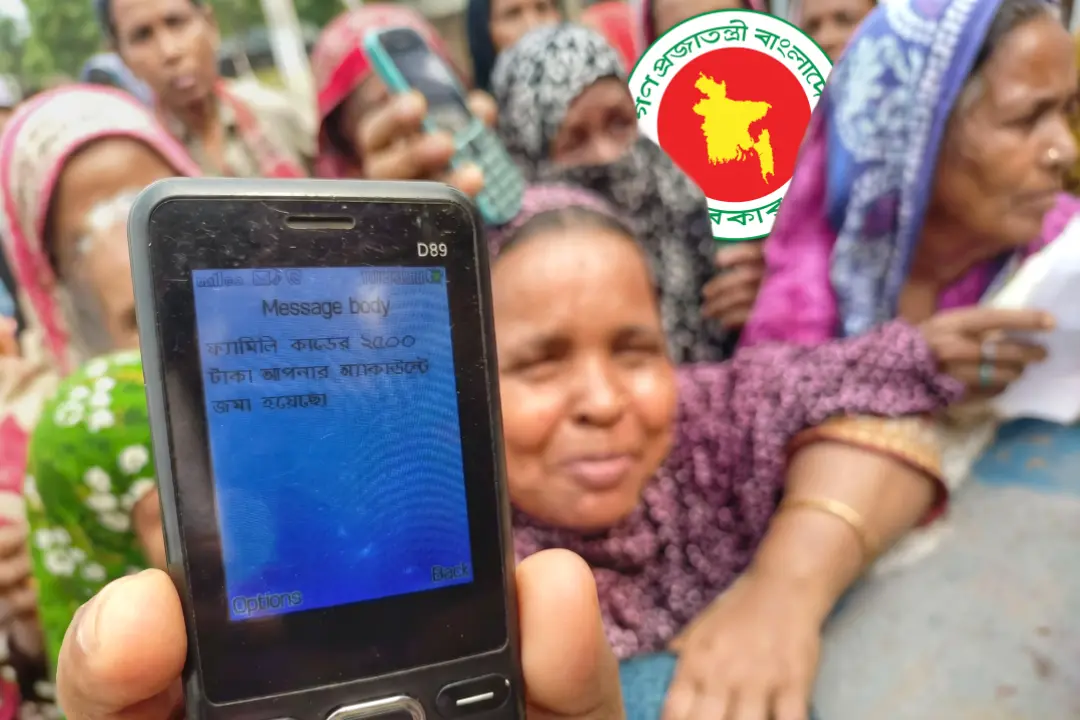
The initial vision for the Family Card
The first plan was very big. The government wanted to help 150,000 families. They planned to give each family 2,500 BDT every month for a full year. This direct cash would cost 450 crore BDT. Adding office and tech costs made it 500 crore BDT. The long-term goal is even larger. The Prime Minister wants to reach 4 crore families in five years. The card should be in the name of the housewife. This helps women manage the home. It aims to meet 70% of a family’s daily food needs.
How did the budget change to 38 crore
The budget dropped because the pilot is now smaller and shorter. It is a three-month test ending in June 2026. The number of families fell from 150,000 to exactly 37,567. The government removed 30,000 people during screening. These were government workers or people already getting other help.
The Math for the 38.07 Crore Budget:
- Direct Cash: 25.15 crore BDT goes to the women via mobile wallets.
- Setup Costs: 12.92 crore BDT pays for data, system development, and smart cards.
- Calculation: 37,567 families × 2,500 BDT/month × ~3 months = ~28 crore BDT in cash. The rest covers the one-time digital setup.
This smaller start helps test the technology before the full rollout.
The plan looks good on paper and the PM is eager to implement it
The Prime Minister is moving very fast. He launched the program only three weeks after forming the government. He went to a playground near the Korail slum for the event. He pressed a laptop button to send money instantly to the women. He calls this a landmark for women’s empowerment. He believes his government can reach all 4 crore women-led families in five years. He says the government must follow rules and use pilot projects to do it right.
Can this initiative save the poor and control inflation
This card might protect the poor from rising food prices. A study says it could lift 1.23 crore people out of poverty. It could reduce the national poverty rate by over 7 percent.
This is the hopeful side of the story. We must stay hopeful. It is the only way to live with air pollution and broken roads.
We deal with traffic, mob lynching, and poor law and order. We suffer from bad health care. The PM now follows traffic signals to show he is a commoner. Perhaps this card will work better than the traffic lights. We hope it fills stomachs even if the environment is a mess. Let us see if a digital card can fix a system with so many leaks.

The Family Card is a great way to help the poor. It is good to put everyone under one card. However, will the government need to take on debt for this? Moving money from mega-projects and unspent funds might slow down infrastructure growth. Will the government also raise taxes or VAT on products? In India, higher fuel taxes were used to find money for these programs.
Her work proves that education needs more than just books. She repairs broken homes because children need a safe place to live first. Her foundation even provides food and support to gain the community’s trust. This shows that the government must take responsibility for basic needs. Education can only thrive when hunger is gone.
This may not create a dependency culture where people rely on jobs
instead of handouts.
– Opinion | Daily ScrollDown