


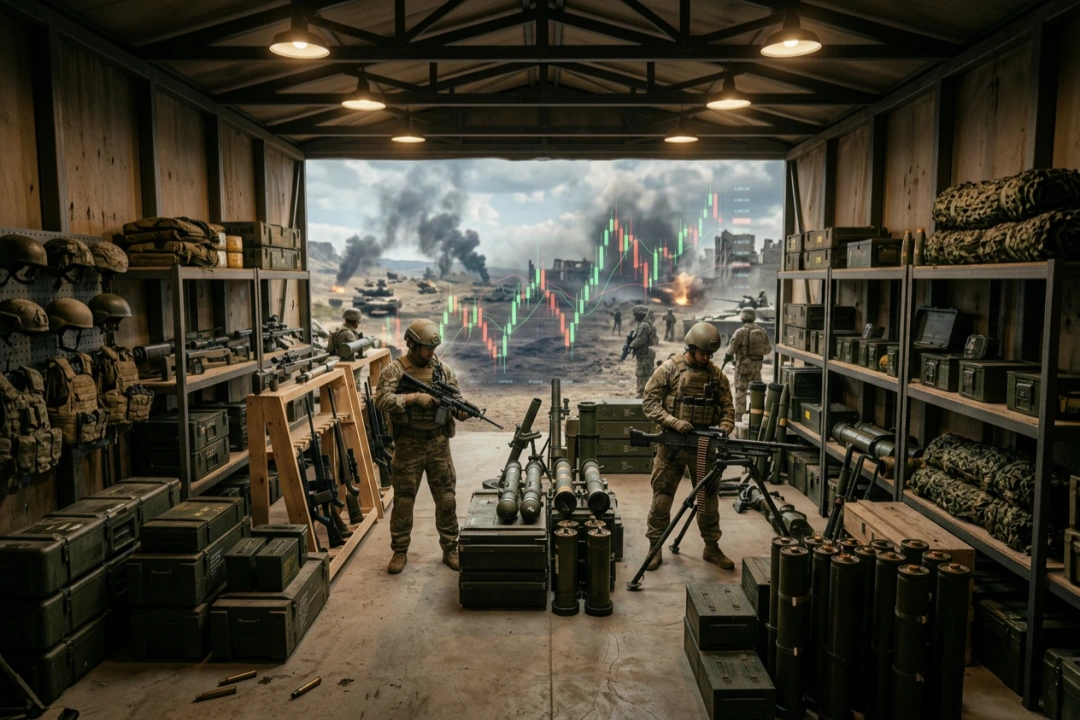
How to Sell a Gun and Why Power Loves It
Companies make weapons like jets, missiles, and armored vehicles. They sell these to their own governments and to other nations. This is very important for a country’s power. The United States leads this market by a huge margin. It accounts for 42% to 43% of all global arms exports. Selling weapons helps a country build alliances. It also gives them strategic influence around the world. For companies, this business is about massive economic output. The US military budget is nearly one trillion dollars. More than half of this federal budget goes to private contractors. These companies also provide many jobs in different states. This makes politicians want to keep the money flowing.
The Horror of Peace: A Nightmare for Profits
Peace is not profitable for the arms industry. Conflict creates “additional demand” for weapons. When a war starts, defense stock prices surge. Companies need threat perceptions to grow. They use fear as a marketing strategy. This fear justifies spending more on defense. Without an enemy, it is hard to sell more bombs. The industry depends on permanent wartime spending levels. They create a narrative that military action is always necessary. If there is no war, they lobby for “peace through strength”. This means buying more weapons even when there is no active fight. The goal is to make war and security the only answer to every crisis.
The “Security” Myth: Why the Bad Guys Have Our Best Stuff
Arms companies say they provide security and protection. Yet weapons often flow into regions with high tension. Laws are supposed to stop sales to conflict zones. But governments decide who is “in conflict” based on their own interests. This judgment is subjective and political. There is no objective international list to stop these sales. Because of this, arms are regularly sent to countries with human rights violations. The “Global War on Terror” actually led to more terror and more violence. The demand for products is more important than who uses them. The system is built to promote sales, not to restrict them.
The Untouchables: Big Stakes and Zero Mistakes
The US and its “Big Five” firms dominate global trade. These companies have incredible power over the government. They spend millions of dollars on lobbying every year. More than 98% of US lawmakers receive campaign donations from the arms industry. Lawmakers who vote for higher military budgets get more cash. Some politicians even hold stocks in the same companies they oversee. There is a “revolving door” between the military and these firms. Former generals often sit on the boards of defense contractors. The Pentagon has failed many financial audits but still gets more money. While taxpayers pay for the wars, big shareholders take the profits. These include massive investment firms like Vanguard and BlackRock. The “big shots” find loopholes while the rest of the world faces the consequences.

War is a steady business plan. Companies use fear to sell bombs. Big shareholders get rich while taxpayers pay. Politicians take donations and keep the war machine running. In this world, peace is a financial loss. Profit is the only thing that matters.
Like a vampire, the arms industry knows one simple truth: its growth depends on blood.
– Opinion | Daily ScrollDown