


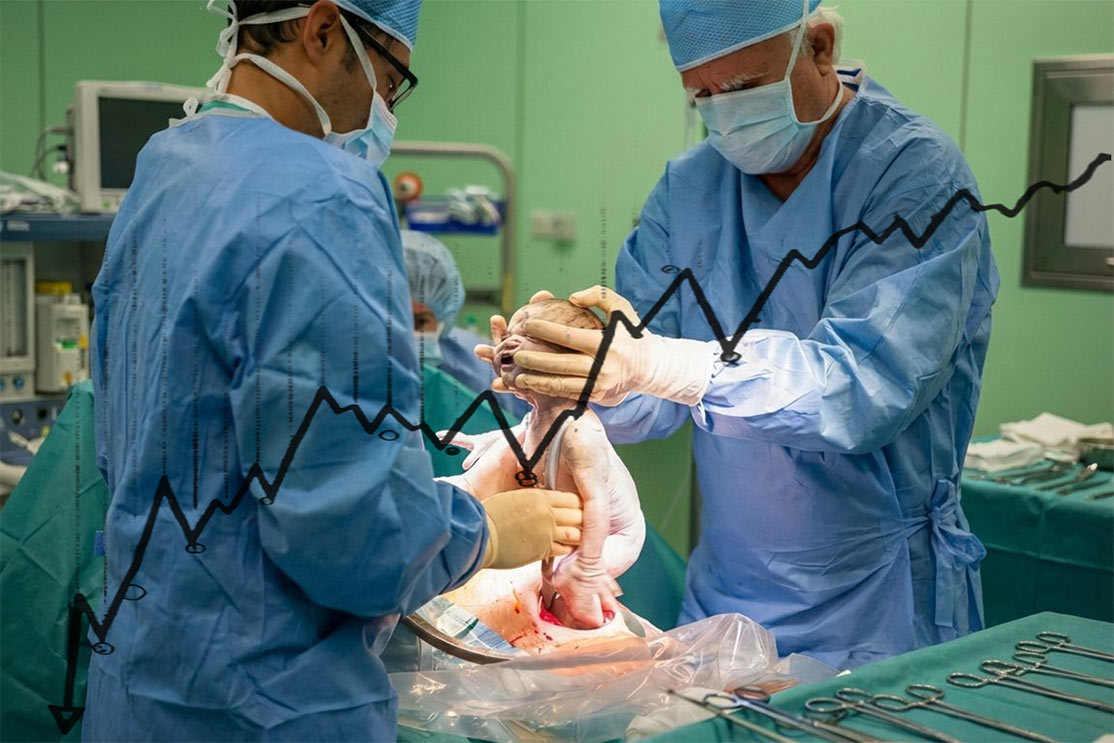
Last year, around 1.7 million babies in Bangladesh were born through unnecessary cesarean surgeries, causing an estimated Tk 5,000 crore in annual financial losses.
Bangladesh is facing a serious rise in unnecessary cesarean deliveries, with nearly 1.7 million babies born through avoidable surgery in 2025, according to a recent study. Experts estimate this trend causes over Tk 5,000 crore in economic losses every year, alongside growing health risks for mothers and newborns.
The findings were shared at a research presentation titled Reducing Unnecessary Cesarean Section in Bangladesh, organised by Ashulia Women and Children Hospital on Wednesday.
C Section Rates Far Above Global Levels
Presenting the research, Professor Anjuman Ara said that globally, about 21 percent of births occur through cesarean delivery. In Bangladesh, the rate is much higher, at 45 to 52 percent. The situation is worse in private hospitals, where 85 to 90 percent of births are done through surgery.
She noted that out of 3.5 million births in 2025, around 1.68 million were unnecessary cesareans. A previous study from 2018 showed these procedures are responsible for massive financial waste each year.
More than 70 percent of private maternity facilities operate with little or no effective monitoring. Many lack trained staff, emergency care, or proper labour rooms, pushing hospitals to choose surgery as a faster and more profitable option.
Trend Moving Towards Crisis
Data shared at the event shows that cesarean deliveries in hospitals rose from 30 percent in 1999 to 69 percent in 2022. Experts warned that without urgent action, 90 percent of hospital births could be cesarean by 2030.
Professor Ferdousi Begum said normal delivery is often wrongly portrayed as dangerous and painful, creating fear among pregnant women. She pointed out that decades ago mothers died due to lack of surgery, while today many are dying due to excessive surgery.
Normal Births Still Matter
Professor Khurshid Talukder said both doctors and patients often avoid normal delivery because it takes time. He challenged the belief that normal delivery causes brain damage in babies, explaining that most newborn brain injuries occur before birth, not during labour.
He stressed that normal delivery plays a key role in building a child’s immunity and long term health, as it allows the transfer of beneficial microbes from mother to baby and enables immediate skin to skin contact after birth.
A Model That Worked, Partially
Ashulia Women and Children Hospital reduced its cesarean rate from over 60 percent to 42 percent by introducing counselling, labour monitoring, medical audits, and allowing normal delivery after previous cesareans. While this model was expanded to other hospitals with support from the Gates Foundation, results elsewhere were limited.
Health Directorate Director General Professor Abu Jafar and AWCH Chief Executive Dabir Uddin Ahmed were also present at the event.

Private healthcare in Bangladesh has quietly become a system that many ordinary office workers simply cannot afford. Treatment costs rise faster than salaries, and medical bills often feel less like care and more like extraction. For many families, getting sick now means choosing between debt and delay.
It is telling that people sometimes feel more hopeful putting Tk 100 in a mosque or temple than walking into a private clinic. Faith becomes cheaper than medicine. That is not superstition, it is economic stress talking.
The crisis becomes brutal when serious illness hits. CCU admission costs are beyond imagination for middle and lower income families. At that point, choice disappears. Not everyone can sell land, borrow endlessly, or crowdsource survival.
Government hospitals then become the only option, not because they are perfect, but because they are reachable. They carry skilled doctors and experience, but they are overwhelmed, under-resourced, and stretched thin. Private hospitals, meanwhile, often sell speed and certainty at prices that quietly exclude most people.
This is not just about public versus private care. It is about a system where healthcare feels like a luxury product, not a public necessity. When treatment becomes fear driven and profit led, trust collapses.
A country cannot heal when its people hesitate to seek care. Until regulation tightens and affordability becomes a real policy goal, illness will continue to push families toward prayer, panic, or poverty instead of proper treatment.
Healthcare should not feel like a gamble. It should feel like a RIGHT, No?
– Opinion | Daily ScrollDown
Source: Prothom Alo