


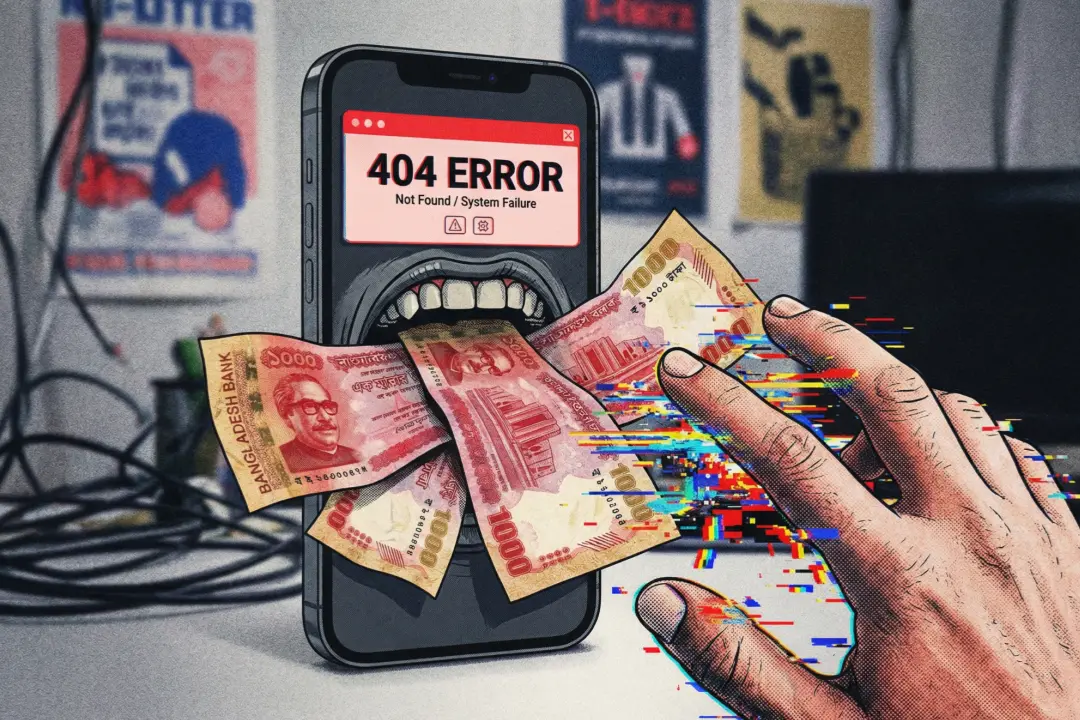
The Long History of ‘Magic’ Disappearing Acts
Banking fraud in Bangladesh is an old game with new tricks. For years, scammers have used fake calls and “bKash theke Nahid bolchi” stories to steal money. They often pretend to be customer service agents. They ask for your PIN to “upgrade” or “verify” your account. Now, they use “magic” links sent via WhatsApp or social media. These links often promise rewards or prizes to trick you. Once you click, they can take control of your device or access your data. Scammers target popular services like bKash and Rocket because millions use them. They wait for busy times like Eid when the network is slow to do their work.
The High Price of a Single Click
Golam Mawla is a simple madrasah lecturer. He never used a banking app or even an ATM card. He always used paper cheques to withdraw his salary. His only “fault” was curiosity. He received a WhatsApp link promising a reward and clicked it. Like a dark magic trick, that one click let fraudsters take over his phone. They used his National ID to open a mobile bank account he didn’t want. Then, they “wrote off” his entire January salary of Tk26,760. For a teacher, this money is his family’s lifeblood. Losing it means a month of worry and struggle just for clicking a link that looked innocent.
Money Vanished and Doors Slammed Shut
Can this teacher get his hard-earned money back? The outlook is very grim. Rupali Bank officials say they cannot recover the funds. They claim the transactions look “legal” because they came from the mobile app. The teacher even tried to go to the police station to file a General Diary. The police refused to take it. They told him the bank must handle the matter. This leaves the victim in a loop of helplessness. Research shows that for many MFS victims, the compensation rate is zero percent. Banks and authorities often treat these “magic” thefts as the customer’s own mistake.
The Mystery of the Accidental Recipient
The stolen money traveled from Bhola to a bank account in Gopalganj. It landed in an account belonging to a woman named Brishti Ghosh. When bank officials called her, she made a strange claim. She said she did not know anything about the money. She claimed funds often enter and leave her account quickly. It is hard to believe someone would not notice messages about large sums of money. However, fraudsters often use “fake registrations” and anonymous accounts for these crimes. They find people who do not check their phones or use their IDs to open accounts without them knowing. This recipient might be part of the trick, or she might just be another person whose ID was “magically” borrowed.
Fixing the Broken ‘Magic’ Mirror
The government must take big steps to stop this online “Shakalaka Boom Boom.” Bangladesh has faced everything from the massive central bank reserve heist to small individual thefts. It is not enough to just tell people to “be careful”. The government should pass a dedicated MFS law to protect customers. Banks need to use Artificial Intelligence to flag strange transactions immediately. We also need a better-encrypted system and multi-factor authentication. Most importantly, the government must spread awareness. Every citizen needs to know that a simple link can be a thief’s pencil. Without better security and education, our bank balances will never be safe from these digital magicians.