



Why do prices of daily products go high?
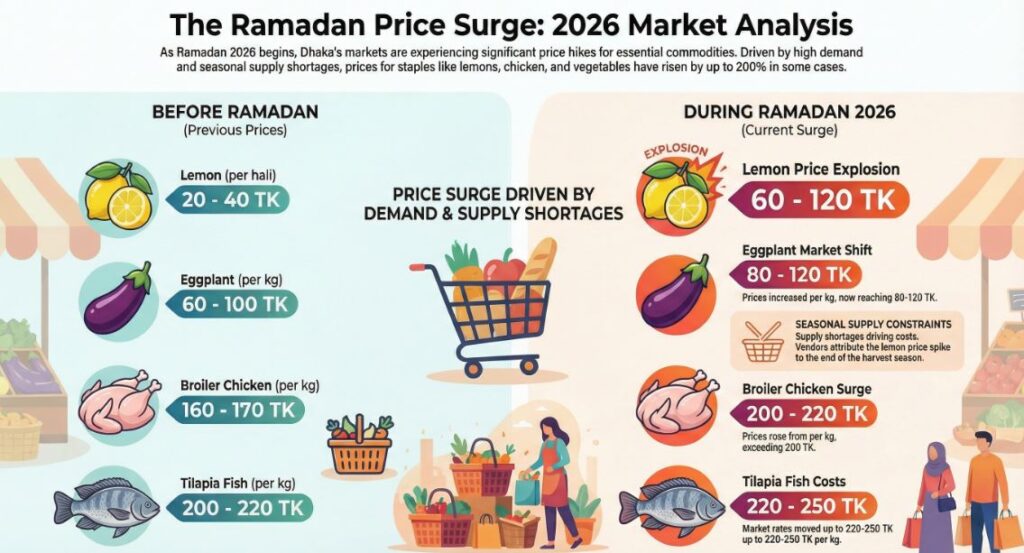
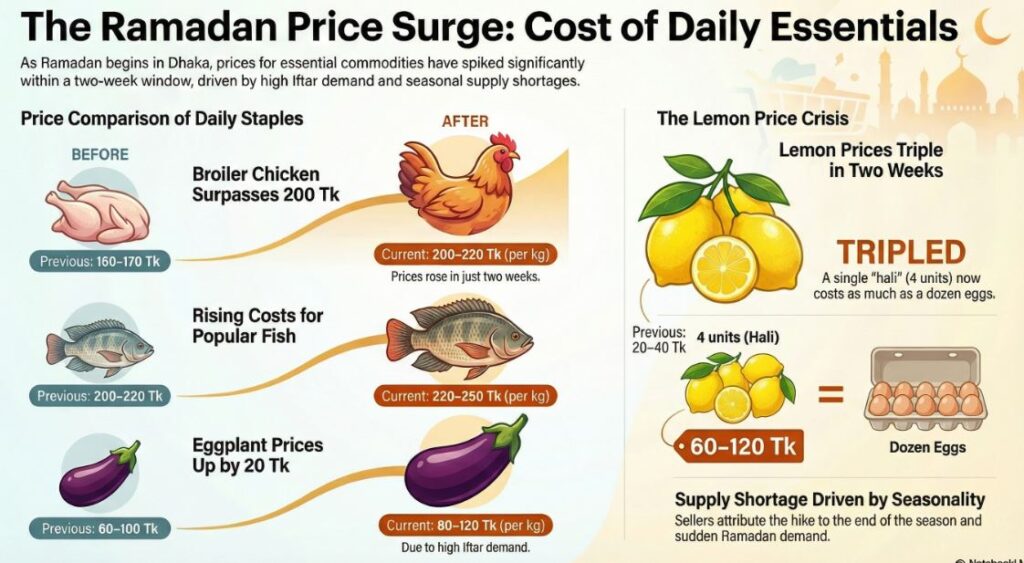
Demand for Iftar items increases during Ramadan. Supply for lemons is low because the season is ending. Lemon prices increased by over 100%. Four large pieces now cost 120 Taka. Chicken supply fell because many birds died in winter. Some traders take extra profit from buyers. Greedy sellers also create artificial crises.
How will the newly formed government tackle this?
One challenge for this government is to curb market syndicates and extortion. It must also ensure that food supply and distribution systems work well. Authorities are asked to monitor markets and take action against hoarding. The government has started selling meat, fish, and eggs at subsidised prices to 10 lakh families. These items are sold from mobile vans until the 25th of Ramadan. The government also plans to introduce Family and Agriculture Cards to help people.
When will the syndicate stop manipulation?
Greedy traders use syndicates to create artificial crises and raise prices. These groups often take control of markets to gain more profit. Intelligence agencies remain active to try and stop these syndicates. Many people believe that insufficient market monitoring allows these groups to continue.
How can the government enforce fixed prices?
Authorities conduct regular market monitoring to check on traders. Regulators must verify stock levels and ensure prices are displayed clearly. The government can take legal action against traders who manipulate prices. Some suggest using the Special Powers Act against dishonest traders. Markets in some cities display charts with “logical” prices for 34 items. Bringing importers and wholesalers into a regular consultative process may also keep prices from rising.