



Hackers From North Korea Stole $2B in Crypto in 2025, raising the all-time total to $6.75B
Crypto is becoming more popular every day and is increasingly seen as a store of value. As major firms invest in it, crypto has also become a growing target for hackers. Both exchanges and individual users are being hit, with personal wallets increasingly targeted in financial scams and theft.
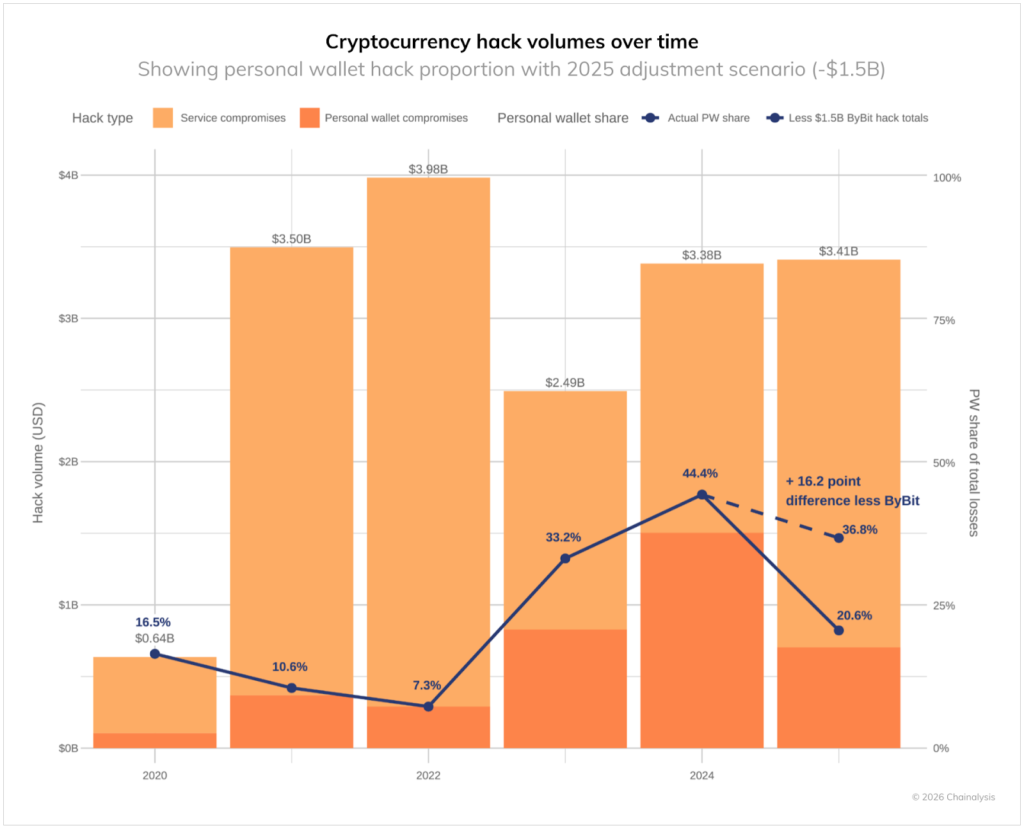
North Korea-linked hackers stole a record $2.02 billion in cryptocurrency in 2025, accounting for 59% of the $3.4 billion stolen globally, according to Chainalysis’ 2026 Crypto Crime Report. The figure marks a 51% year-on-year increase, pushing the country’s estimated all-time crypto theft total to $6.75 billion.
Chainalysis, a blockchain analytics firm that supports governments and crypto companies with compliance and investigations, said North Korea’s ability to steal and launder digital assets continues to improve. The report has been published annually since 2019.
“North Korea’s sophistication and efficacy in laundering the proceeds from these incidents is continuing to improve,” said Andrew Fierman, head of national security intelligence at Chainalysis, warning that the industry needs stronger security controls.
Even with fewer attacks, large-scale hacks dominated 2025. The largest crypto hack ever happened in February, when Bybit lost $1.4 billion. The FBI blamed North Korea, and the single attack made up a major share of this year’s losses.
The report details how North Korean operatives used fake remote IT jobs, often powered by AI tools, to pose as overseas employees and gain internal access to crypto firms. Hackers also relied on social engineering, using emails and messages to trick users into revealing wallet access.
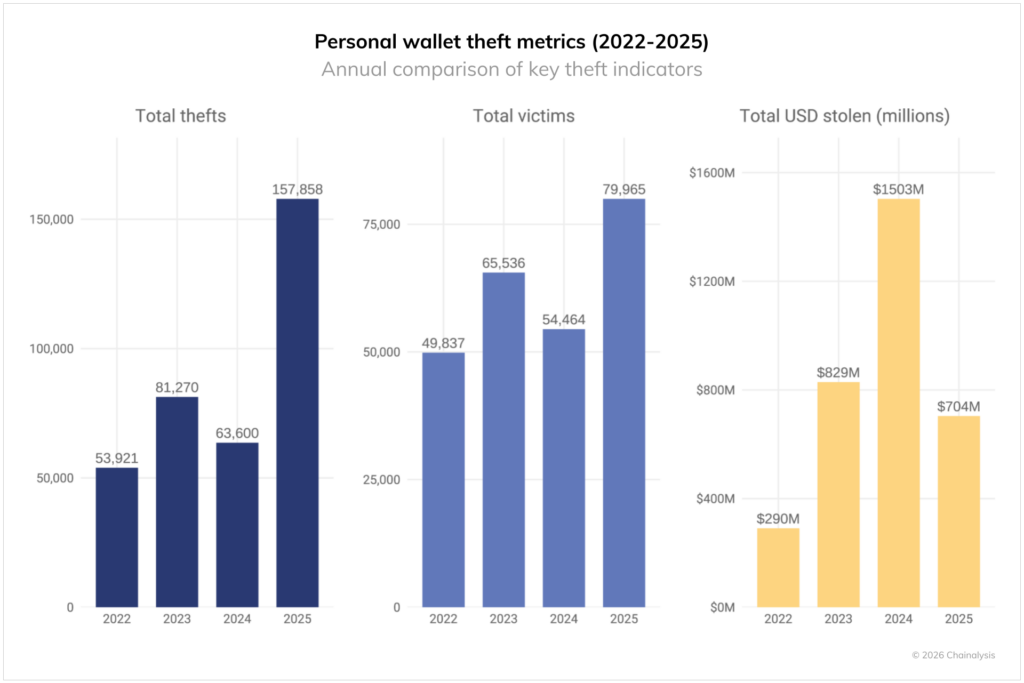
At the same time, personal wallet compromises surged. Chainalysis recorded 158,000 incidents in 2025, affecting at least 80,000 unique victims, nearly tripling from 2022. While the total value stolen from individual wallets fell to $713 million, these compromises still made up 20% of all crypto theft this year.
Analysts say rising crypto adoption, combined with irreversible transactions, continues to expose both exchanges and individual users to growing digital and physical security risks.
*Cryptocurrency remains strictly illegal in Bangladesh, with the central bank saying trading or holding digital assets violates the Foreign Exchange Regulation Act (1947) and the Money Laundering Prevention Act (2012). Bangladesh is grouped with other “absolute ban” countries such as China, Egypt, Nepal, and Algeria.
Source: Chainalysis