


Imagine the Earth is like a giant kitchen from millions of years ago. Tiny plants and animals died and were covered by layers of sand and rock. Heat and pressure cooked them into crude oil, which is also called “rock oil”. Natural gas is like the steam that comes off the cooking, but it is trapped underground. Fuel is just a fancy word for anything we burn to get energy. Oil is the liquid part we find in the ground.
When we want to move gas far away, we make it very cold until it turns into a liquid called LNG. LPG is another kind of gas that we squeeze into metal tanks for cooking. CNG is gas squeezed very tight to run cars. Diesel is a special kind of oil used for big things like buses, trucks, and tractors. All of these are like “juice” for our machines.
How much does Bangladesh depend on the Middle East, and what is the “war math”?
Bangladesh is very dependent on other countries for its energy. It imports 95 percent of its oil and 30 percent of its gas. The Middle East is a huge partner in this. About 63 percent of crude oil comes from countries like Saudi Arabia and the UAE. Saudi Arabia is the biggest single source, providing 35 percent of that oil. For gas, Qatar provides 64 percent of the LNG.
The “economic math” during a war looks scary. A war involving Iran could wipe out 3 percent of Bangladesh’s GDP. Prices of fuel go up fast. If the Strait of Hormuz is blocked, oil cannot travel easily. This causes long lines at gas stations in Dhaka. The government has already started rationing fuel to make sure it does not run out.
Who can replace the Middle East, and how is India helping?
Bangladesh is looking for new friends to supply fuel. For refined products like diesel and furnace oil, the country already relies heavily on Singapore and Malaysia. Singapore provides 45 percent of the diesel. Now, the government is also asking China for help with fuel. There are even plans to look at countries like Brunei and the United States.
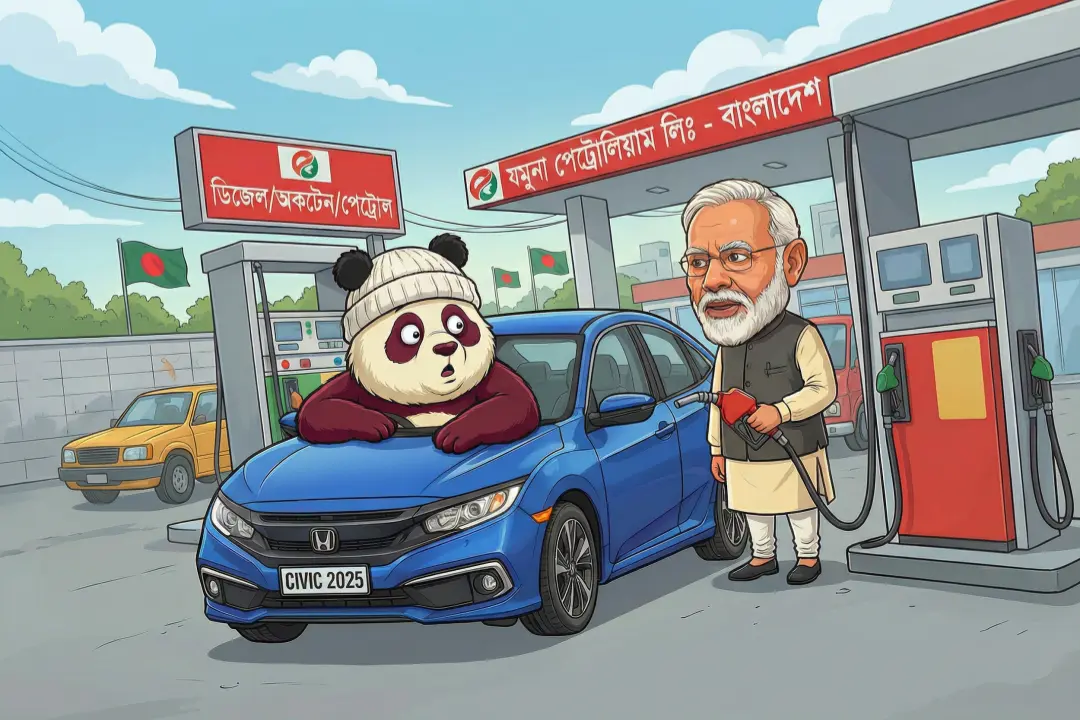
India is playing a very big role right now. It helps through a 131-kilometre pipeline that brings diesel directly to Bangladesh. Bangladesh recently asked India for an extra 50,000 tonnes of diesel. India is reviewing this request “positively” because it wants to support its neighbor. India also sends other fuels like jet fuel and octane by sea. This help is important to keep the country running while the Middle East is in turmoil.
Why does it matter who is in power? Should geopolitics be the same for everyone?
Relations between India and Bangladesh have been like a rollercoaster. After August 5, 2024, when the old leader fled to India, the relationship hit a “historic low”. India was uncomfortable with the new interim government. Tensions grew over security and how minorities were treated. But after the February 12 election, things started to improve.
In a perfect world, geopolitics would stay the same no matter who is in power. But in reality, different parties have different friends. The Awami League had very close ties with India. The BNP and other groups often felt India interfered too much. Now, the new government wants a “reset” based on mutual respect. It shows that leaders’ personal views and history often change how countries talk to each other.
Why having the best relations with neighbors is the only way to avoid an economic “crash.”
You are right that having conflict with neighbors is a recipe for trouble. War acts like a catalyst for a bad economy. It disrupts trade and makes everything expensive. Bangladesh and India share 54 rivers, a long border, and a lot of history. They are “mutually dependent”.
If the two countries fight, it hurts the people first. For example, thousands of Bangladeshis go to India for medical treatment. When relations were bad, visas were stopped, and people suffered. Peace allows for transit, trade, and energy cooperation. Without good neighborly relations, a country spends more time worrying about security than growing its economy.