

When a $100 Withdrawal Costs You $50

When a $100 Withdrawal Costs You $50

With banks destroyed and no cash entering Gaza, damaged banknotes have become lifelines.

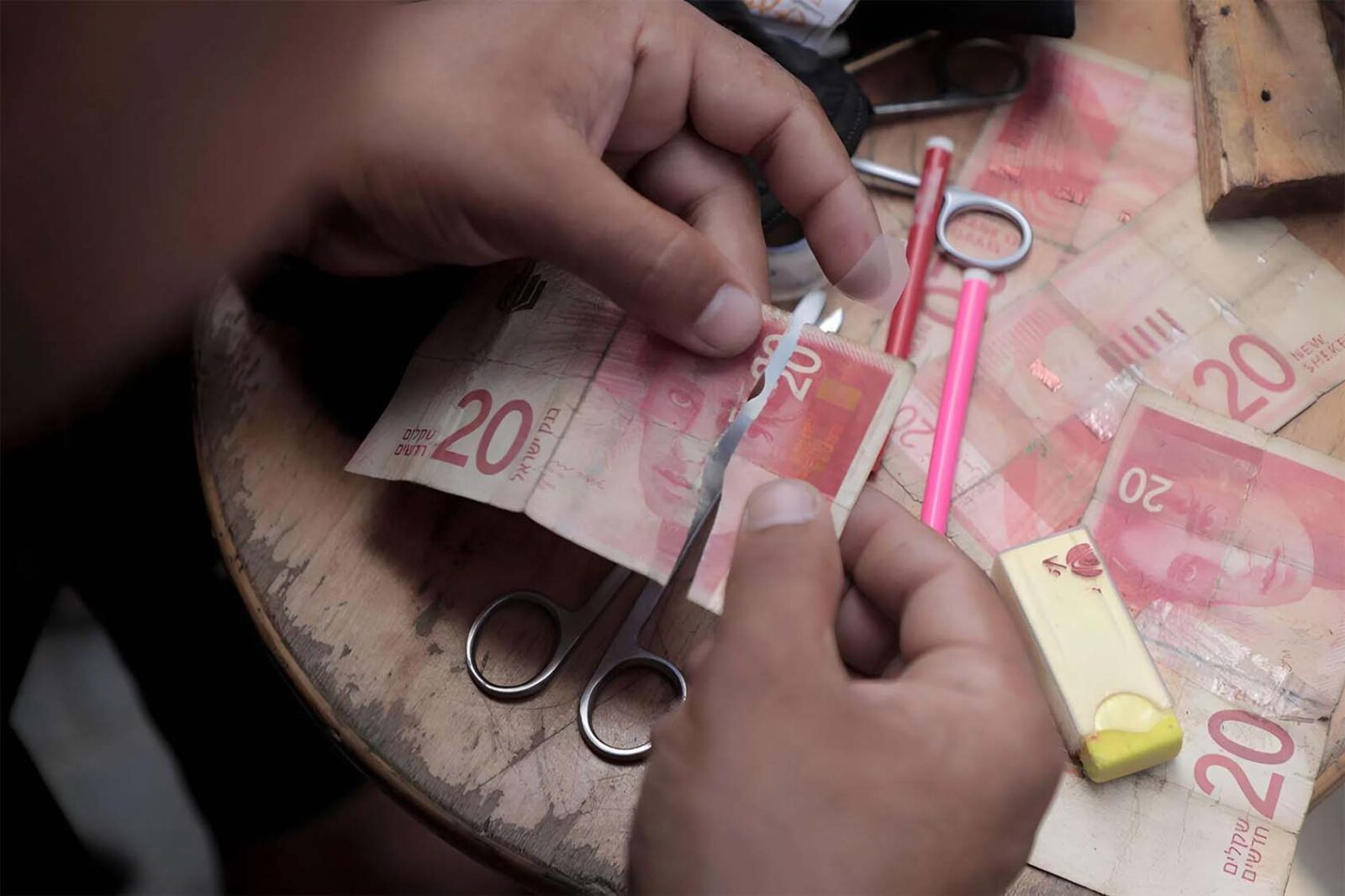
Baraa should be a university student. Instead, he repairs money so it can still be used.

After the Hamas-led attack on Israel in 2023 and the war that followed, Israel stopped sending banknotes into Gaza. Many banks were destroyed or looted, and ATMs stopped working. Even though a few bank branches have reopened after the ceasefire, cash is still almost impossible to get.

In a busy market in Gaza City, Baraa Abu al-Aoun carefully fixes damaged banknotes. He smooths them, darkens faded colour with pencils, and glues torn edges. This small roadside setup is now his only way to earn. Baraa should be a university student. Instead, he repairs money so it can still be used. After the Hamas-led attack on Israel in 2023 and the war that followed, Israel stopped sending banknotes into Gaza. Many banks were destroyed or looted, and ATMs stopped working. Even though a few bank branches have reopened after the ceasefire, cash is still almost impossible to get. People still need money to buy food. With little cash available, many turn to informal money dealers who charge very high fees to convert digital transfers into cash. In some cases, people lose nearly half their money in fees. Because of this, every banknote matters, even torn or faded ones. That’s why Baraa’s work is in demand. He says his tools are simple, but his goal is serious: helping people survive.

Hyperinflation Meets Offline Fintech

According to the UN, Gaza’s economy has collapsed. More than 80% of people are unemployed, and almost everyone now lives in poverty. Even those who receive salaries or aid struggle to access cash. Shopkeepers say damaged notes are often rejected, and small change like coins has nearly disappeared. Inflation has made the problem worse. With cash almost unavailable, banks and aid groups have introduced text-based payment systems that work without internet access. These allow people to send and receive money using basic mobile phones, offering a temporary way to buy essentials in a cash-starved economy.

Food prices in Gaza remain extreme. Aid agencies report that 2kg of tomatoes can cost around $80, highlighting how shortages, inflation, and broken supply chains have pushed basic food items out of reach for many families.

US President Donald Trump’s proposed 20-point peace plan promises an economic revival for Gaza, including reconstruction, foreign investment, and job creation led by international experts. The plan speaks of turning Gaza into a place of opportunity and growth, but offers no clear timeline or details on how recovery would begin while widespread destruction, poverty, and severe cash shortages continue. Meanwhile, UN agencies warn that Gaza is facing the worst economic crisis ever recorded, raising questions about how long-term development can start without immediate stability. Baraa hopes one day the war will fully end. He wants to return to university and find stable work.

In Gaza, we're just surviving.
We're not human beings anymore.