



Bangladesh’s defaulted loans have gone to record levels, leaving depositors waiting for their money. With many large borrowers failing to repay, loan recovery remains uncertain.
In Tongi, Gazipur, an abandoned garment factory of the Anontex Group has remained shut for seven years, leaving thousands jobless. The factory is now under the control of Janata Bank, after the group failed to repay more than Tk 7,500 crore in loans. Bank appointed guards now ensure that no assets are removed, but recovery remains uncertain.
Anontex is not alone. Major groups such as Beximco and S Alam have also defaulted on massive loans, many taken through front companies. A large number of borrowers have fled abroad, with funds allegedly siphoned off overseas.
Economists say the problem was long hidden and surfaced after stricter classification rules, court decisions, forensic audits, and pressure from the IMF. According to Bangladesh Bank, these factors together caused the sudden spike in reported defaults.
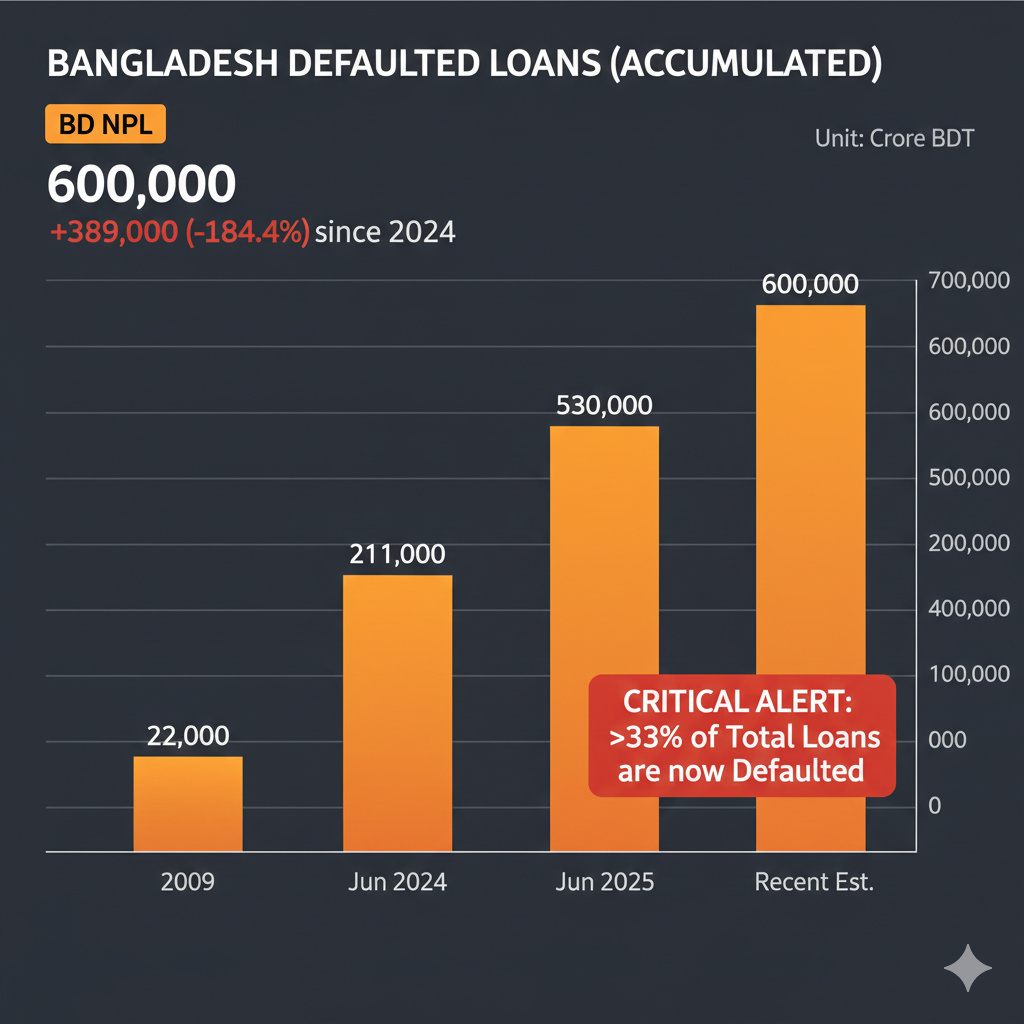
*NPL – Non Performing Loan
The scale of defaulted loans is enormous, putting severe pressure on the economy. Recovery remains uncertain, banks are struggling to return depositors’ money, and lending to the private sector has slowed, weakening new businesses and jobs.
There is a vicious cycle at work here. Investment, employment, and people’s living standards are all being affected.
Mustafizur Rahman
Distinguished Fellow at the Centre for Policy Dialogue.
The impact is severe. Banks are struggling to return deposits, new private sector lending has slowed, and investment and job creation are taking a hit. Centre for Policy Dialogue warns this has created a damaging chain reaction across the economy.
Loan recovery efforts face major obstacles. Collateral values are often far lower than loan amounts, real beneficiaries are hard to trace, and much of the money is believed to be abroad. Some bankers admit that traditional recovery tools simply no longer work.
The central bank has responded with loan rescheduling, asset sales, incentives for recovery, and a task force to bring back stolen assets from overseas. There are also plans to merge several weak Islamic banks to stabilize the sector.
Even then, analysts caution that much of the damage is permanent. Strengthening banks may protect depositors going forward, but a large share of the lost money may never return.
Source: BBC