


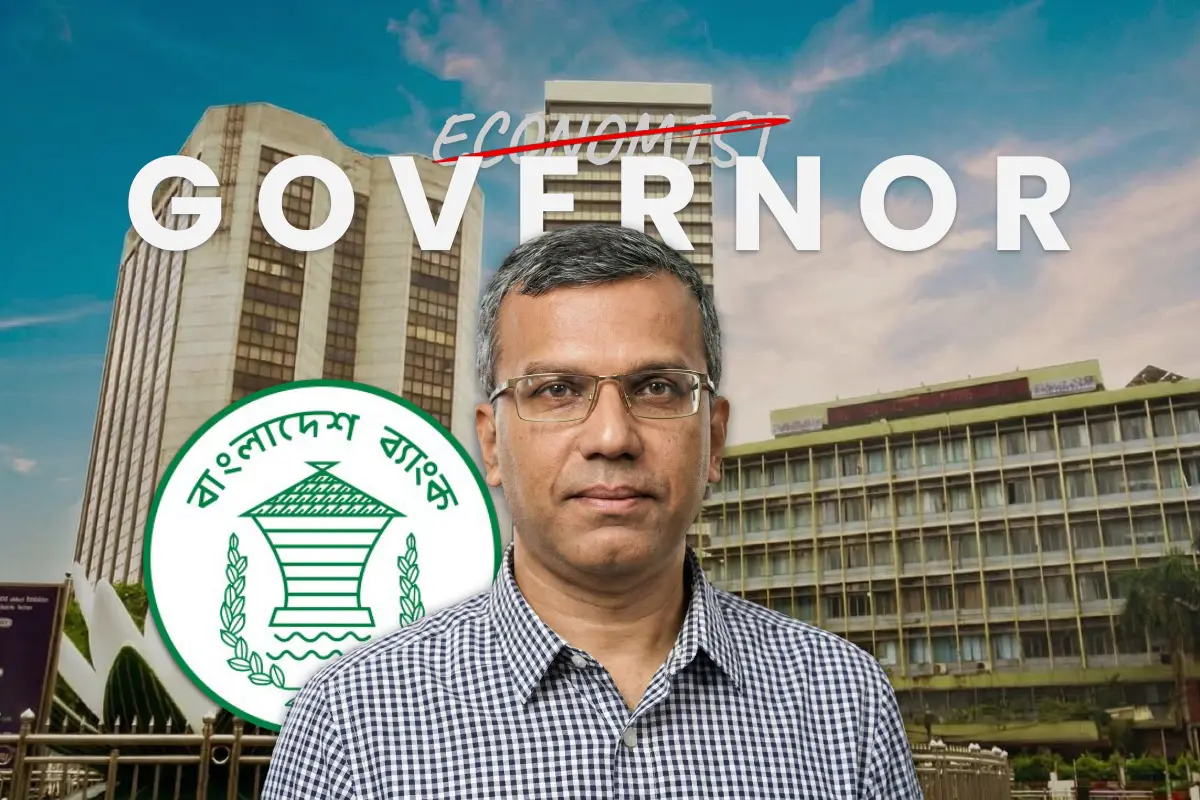
Bangladesh appoints businessman Md Mostaqur Rahman as governor, replacing Ahsan Mansur amid controversy over conflicts of interest and bank investor compensation.
Md Mostaqur Rahman is the 14th Governor of Bangladesh Bank. He was born in Dhaka in 1966. He earned a Bachelor of Commerce in 1987. He got a Master of Commerce in accounting from Dhaka University in 1988. He also holds an FCMA degree in cost management.
He is a businessman and an accountant. He was the managing director of Hera Sweaters. He is a member of business groups like BGMEA and DCCI. He served as chairman of the BGMEA committee on Bangladesh Bank. He also had a role on the Chittagong Stock Exchange board. He was part of the BNP’s election steering committee in early 2026.
Governors’ roles and their impact on economic growth
The governor leads the country’s monetary policy. He supervises the entire banking sector. He must control inflation and ensure financial stability. The governor takes a firm stance against weak banks. He regulates and supervises all financial institutions.
These roles are vital for the country’s growth. Financial discipline is a requirement for national progress. Stability helps the economy stay strong. Experts and TIB fear a conflict of interest. They worry a businessman might prioritize corporate interests over the public interest. They say a regulator should not come from the same sector he must police.
His record of loans and why this is an issue
Mostaqur Rahman has a record of troubled loans. His company, Hera Sweaters, took a loan from Mutual Trust Bank. The loan amount was about Tk 860 million or Tk 89 crore. This loan became non-performing.
The bank rescheduled the loan in June 2025. This happened under a special facility. This took place shortly before his appointment as governor. Experts say this is a serious issue. It creates doubt about his ability to be impartial. Recovering bad loans is one of his main duties.
What are the challenges he is going to face?
The new governor faces many difficult tasks. Recovering non-performing loans will be his “acid test”. He must restore confidence in the banking industry. He needs to control high inflation. He must manage central bank officials who have been protesting.
He also needs to keep the central bank independent. International lenders like the IMF value this independence. The previous governor was seen as a reformer. Rahman must prove he is not working for special interest groups. He must implement the government’s goals for good governance.
The previous governor’s work and the zero share price issue
The previous governor, Ahsan H. Mansur, did some good things. He grew foreign reserves and stabilized the banking sector. But he also took controversial steps. He used a “haircut theory” to merge five failing banks, including EXIM Bank and others.
Bangladesh has a very fragile stock market. It has seen much corruption and many irregularities under different governments. Even so, many small investors put their hard-earned money into it. They buy bank shares for long-term safety. Then the interim government said the share price would be zero. There was no plan for reimbursement at that time. This happened because the banks were bankrupt. Their net asset value was very low. It was minus Tk 350 to Tk 420 per share.
There is another major concern. Many feel those who deposited money in these five banks will not get their interest. “Big shots” and bank insiders took the money through looting. Now, ordinary people are left to repay the loss. This resembles a food pyramid chain where the small people suffer for the greed of the powerful. The previous governor focused only on protecting small deposits up to Tk 2 lakh. He said shareholders would get nothing because their banks had zero value.
Current vs. Interim
The interim government under Mansur gave no money to shareholders. They said the shares had no value because assets were gone. They treated it as a bailout of failing banks. Shareholders were expected to bear the burden of the collapse.
The current government is taking a different path. The new Finance Minister says share values cannot be zero. He believes small investors are not responsible for the banks’ failures. The government is now calculating how to compensate these small investors. They are making a list of affected shareholders. They may pay them based on the last trading price or face value.
Choose a businessman instead of an economist
Most countries choose economists or career bankers to lead central banks. In India, Pakistan, and Sri Lanka, governors usually have PhDs and deep financial experience. About 53 percent of global central bank governors hold PhDs.
Bangladesh has broken this global tradition. Mostaqur Rahman is the first businessman in the country’s history to hold this post. Some call this a gamble by the government. Critics say it could backfire if it leads to “regulatory capture”. It is a decisive and planned shift in policy. The government says it needs this change to meet its new priorities. Time will tell if this choice helps or hurts the economy.