


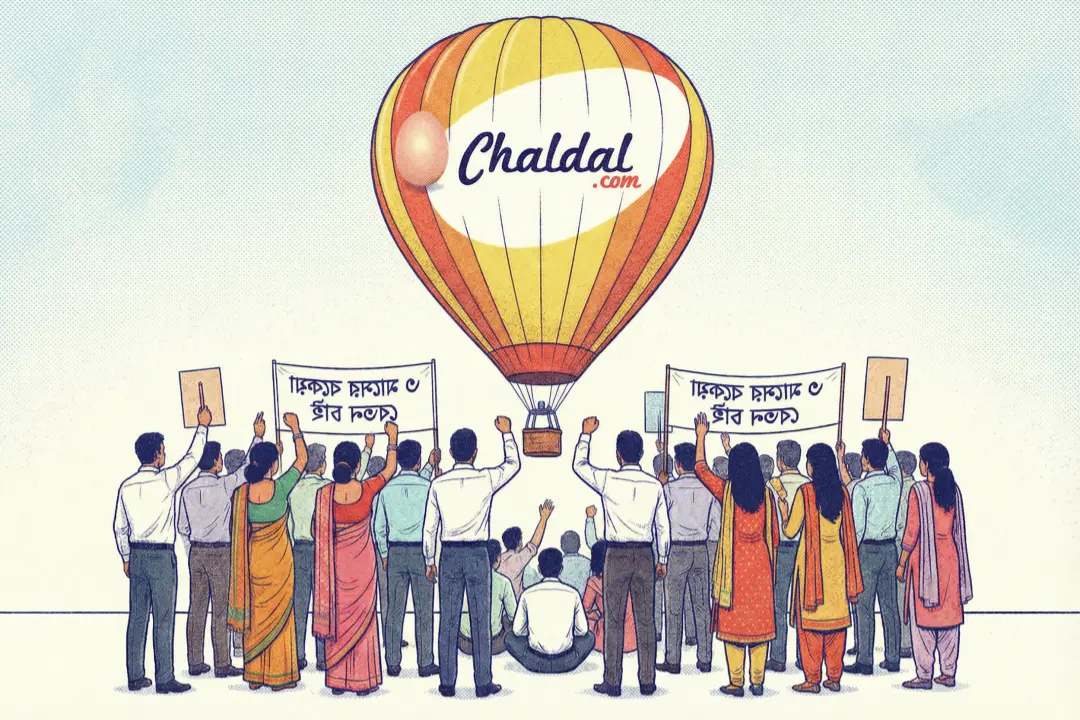
What does Chaldal do, and how do they do it?
Chaldal is an online grocery platform in Bangladesh. It started its business in 2013. The company changed how people in cities buy food. They use a special warehouse model. They have many small warehouses inside city neighborhoods. These are called “micro-warehouses”. This allows them to deliver groceries in just one hour. They built their own technology for inventory and delivery. They also buy products directly from farmers. This helps them cut out the middlemen. They work with large companies like Unilever to get goods. Today, they serve thousands of customers in major cities.
Why can’t they pay salaries despite massive investments? What happened to the money?
Chaldal received at least 300 crore Taka from investors. Famous global names like Y Combinator and the IFC gave them money. But the company now faces a 40 crore Taka money gap. They spent too much money to grow too fast. They expanded to seven cities very quickly. Their model did not work well outside of Dhaka. People in other cities prefer their local shops. They also started too many different businesses at once. They bought a pharmacy and a food delivery app. They even started a digital wallet service.
This took their focus away from groceries. They hired too many people. Their workforce reached 3,300 employees. The monthly payroll became too heavy for their income. Economic shocks in Bangladesh made everything worse. High inflation and a weak Taka hurt the business. The internet blackout in July 2024 was another big blow. Expected money from abroad did not arrive on time. Now, hundreds of workers have not been paid for months.
How big is the startup culture and economy in Bangladesh?
The startup scene in Bangladesh was a success story for a decade. Startups raised over $1 billion in the last ten years. But the time for easy money has ended. Funding fell sharply in 2024 to only $41 million. Local investment dropped by about 95%. Most startups only operate in Dhaka. The system is still very thin and lacks local support. There is a “copycat” culture where people just copy ideas. This creates noise instead of real innovation. The economy is currently holding its breath. High interest rates make people very cautious. Investors have lost trust because of political uncertainty.
What is the future of startups and why do they fail?
The future of startups depends on making a profit. Many startups fail because they focus only on growth. They use hype to get massive loans. Byju’s in India is a famous example of this.
It was once valued at $22 billion. Now it is facing bankruptcy. They spent huge amounts of money to be famous globally. They were a major sponsor for the Indian cricket team. They now owe 158 crore Taka to the Cricket Board. Byju’s took a $1.2 billion loan that they cannot pay back. They were spending 150 crore Taka every month. But they were only earning 30 crore Taka a month. This is a massive debt trap.
In Bangladesh, other startups like Sheba.xyz also faced crises when funding stopped. Many startups burn money without a plan to earn it back. They depend too much on money from other countries. When that money stops, the startups collapse. To survive, they must focus on real work and discipline.