


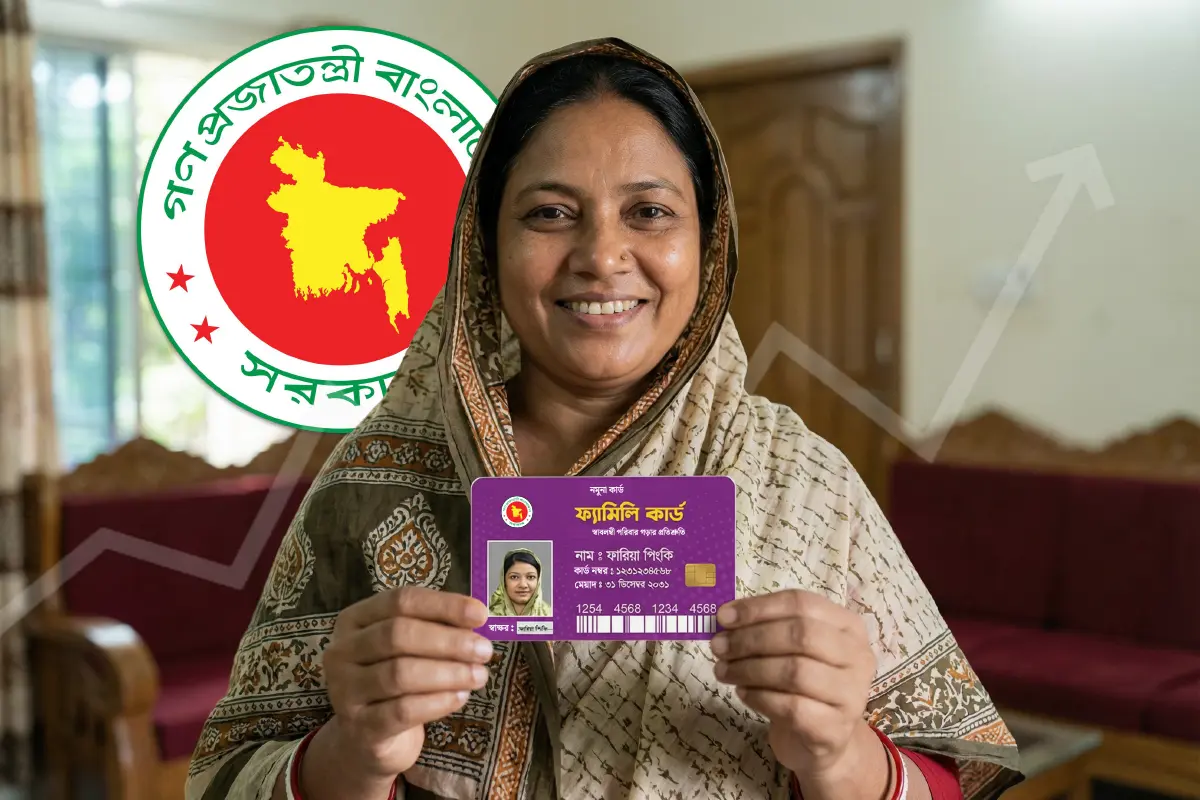
Bangladesh is piloting Family Cards before Eid. This program provides monthly cash or food to 40 million families.
The Family Card and Its Usages
The family card is a tool to help households. It gives direct support to families. The card is usually issued in the name of a housewife. This helps women manage their homes better. It is also meant to give women more power in the family. Each card has a barcode to stop misuse and stay transparent. Families can get Tk2,000 to Tk2,500 every month. Some families might get a food basket instead of cash. This basket includes 25kg of rice and 5kg of potatoes. It also has lentils, edible oil, and salt. The goal is to meet 70% of a family’s daily food needs. This helps protect poor people from rising food prices.
Eligibility for the Family Card
The government wants to reach 40 million families eventually. The program starts with the ultra-poor and the poor. It will later include the middle class in phases. Priority goes to widows and people with disabilities. Housewives or female heads of households aged 18 and older get the card. Vulnerable people like orphans are also eligible. People living in disaster zones or slums are a top priority. The government uses four tiers to decide who gets help. These tiers are ultra-poor, poor, middle-class, and upper-class. The final goal is to make the program universal for everyone.
Freebies and Their Use in Politics
Freebies are goods or services given for free. Governments or political parties provide them without a direct cost to people. Common examples are free electricity, water, or laptops. Other examples include smartphones and healthcare services. Political parties use these gifts to win public favor. They use them to fulfill promises made during elections. This is often a strategy to buy votes. Politicians use freebies to stay in power. They target specific groups of voters to get their support. Some people think these gifts are just for winning elections. They may not fix the real causes of poverty.
Government Feasibility and Potential Debt
A small test program for 150,000 people will cost Tk500 crore. Helping 5 million families will cost about Tk12,000 crore every year. This is around 0.15% to 0.20% of the country’s total economy. The government already spends Tk9,359 crore on other food help programs. If the new card replaces these old programs, the government needs Tk2,700 crore extra.
The government plans to join together more than 140 small aid programs. This joining can save about Tk9,000 crore. They will use extra money set aside in the main operating budget. They will also move money away from very big building projects known as “mega-projects”. Any unspent money from the development budget will be used as well.
Experts warn that these programs put a heavy strain on the budget. Giving away free goods can lead to very high public debt. In some Indian states, debt is projected to be more than 35% of their total economy. Punjab’s debt might even go over 45% by 2026-27. In Rajasthan, debt reached ₹5.37 lakh crore by March 2023. Their power companies also owe more than ₹79,000 crore.

The Family Card is a great way to help the poor. It is good to put everyone under one card. However, will the government need to take on debt for this? Moving money from mega-projects and unspent funds might slow down infrastructure growth. Will the government also raise taxes or VAT on products? In India, higher fuel taxes were used to find money for these programs.
Her work proves that education needs more than just books. She repairs broken homes because children need a safe place to live first. Her foundation even provides food and support to gain the community’s trust. This shows that the government must take responsibility for basic needs. Education can only thrive when hunger is gone.
This may not create a dependency culture where people rely on jobs
instead of handouts.
– Opinion | Daily ScrollDown