


Japan raised interest rates to their highest level since 1995 as inflation stays above target.
The Bank of Japan increased its main interest rate by 0.25 percentage points to around 0.75 percent on Friday. The decision was widely expected by markets and was made under Governor Kazuo Ueda.
This is the first interest rate increase since January and the first since Prime Minister Sanae Takaichi took office.
The government wants inflation to slow down, but it also wants to keep government borrowing costs low. Higher interest rates usually make borrowing more expensive for governments.
Raising interest rates often strengthens a country’s currency. In Japan’s case, a stronger yen could help reduce inflation, as the weak yen has made imports such as fuel and food more expensive.
However, higher rates also increase the cost of government debt, since the government must pay more interest when borrowing money.
Japan’s inflation rate, excluding food and fuel, rose to 3 percent in November, remaining above the central bank’s 2 percent target.
Some economists say this rate increase may have limited impact on inflation because financial markets had already expected it and the yen remains relatively weak.
Most analysts believe the Bank of Japan may raise rates once more next year, possibly reaching 1 percent. Still, the central bank is expected to wait several months to assess the impact on the economy.
The move marks a major shift for Japan, which has kept interest rates extremely low for nearly three decades.
Japan’s decision comes at a time when other major central banks are cutting interest rates. The Bank of England recently lowered its rate to 3.75 percent, while the US Federal Reserve has also reduced rates multiple times this year.
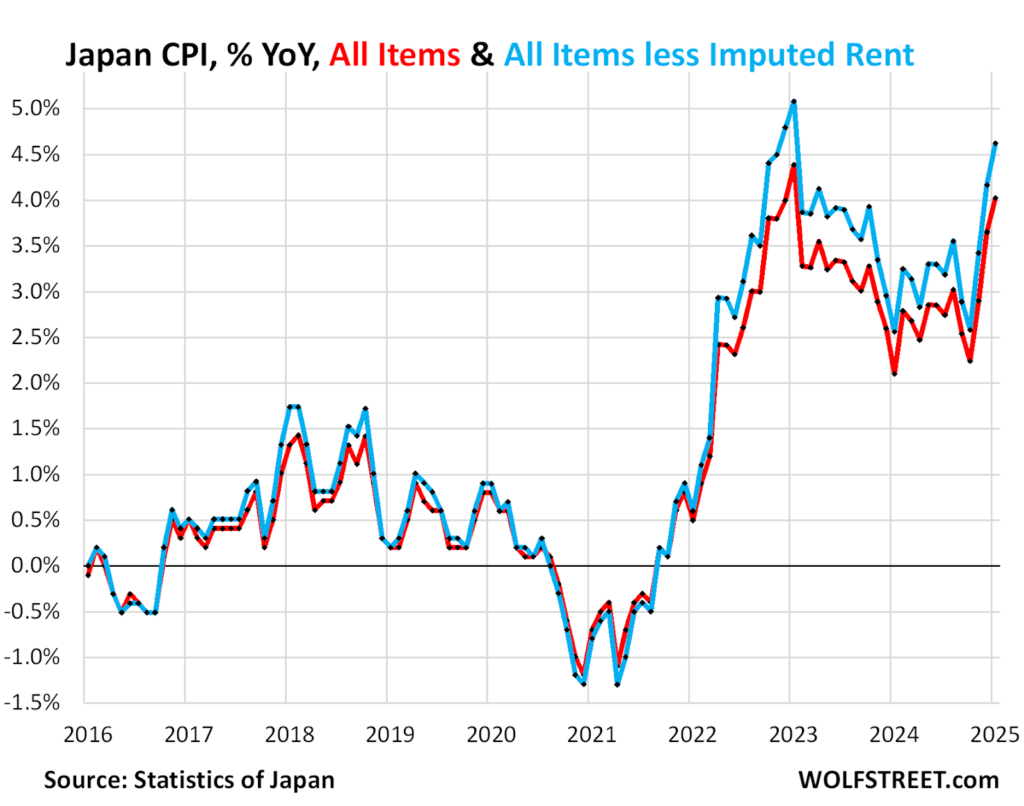

This shift signals the end of Japan’s long era of ultra cheap money. With interest rates rising, savings in Japan may finally earn modest returns, while mortgages and business loans are set to become more expensive. Globally, higher Japanese rates could encourage investors to bring money back home, potentially affecting international stock and bond markets.
Higher interest rates also mean the Japanese government will now face higher interest payments on new borrowing, after decades of financing its massive debt at near zero cost. While the government was never borrowing for free, the cost was extremely low by global standards.
Notably, the idea of raising interest rates to control inflation was publicly criticised by Prime Minister Sanae Takaichi before she came to power. Now in office, she has prioritised fighting inflation and has not opposed the central bank’s decision.
Irony Huh !!!
– Opinion | Daily ScrollDown