


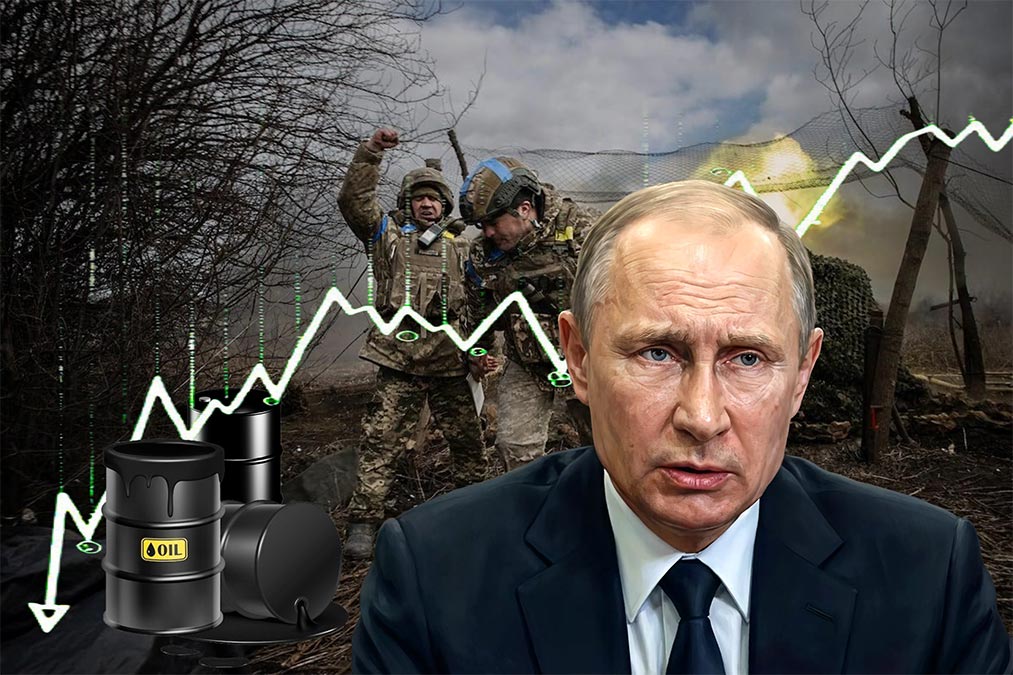
Russia can keep fighting as long as it sells oil. US tariffs have cut India’s imports, while China remains the key buyer
Russia’s economy is under mounting pressure, with high inflation, a widening budget deficit driven by heavy military spending, and declining revenues from oil and natural gas. Economic growth has slowed sharply, yet analysts say these challenges are unlikely to push President Vladimir Putin toward ending the war in Ukraine anytime soon.
Experts from institutions including the Center for Strategic and International Studies and the Royal United Services Institute argue that Russia’s economy remains strained but manageable. As long as oil exports continue at reasonable prices, the Kremlin can sustain the war for several more years under current sanctions.
If you look at the economy itself, it’s not going to be that ultimate straw that breaks the camel’s back.
Maria Snegovaya
Senior Fellow (Russia and Eurasia)
Center for Strategic and International Studies (CSIS)
Historical examples suggest Russia tends to accept unfavorable peace settlements only during severe economic crises, such as after World War One or the Soviet war in Afghanistan. Analysts say today’s conditions are far from that threshold.
Military spending now consumes a large share of Russia’s budget, close to forty percent by some estimates. This has created economic beneficiaries, including defense contractors, factory workers, and soldiers, whose wages and benefits have risen sharply since the war began. In some regions, poverty has declined as military pay and compensation payments flow into local economies.
Inflation and tax increases have placed added pressure on households, but experts note that high inflation has long been a feature of Russia’s economy and has not triggered widespread unrest. The government has also largely avoided mass protests, partly by relying on volunteers rather than broad conscription.
While sanctions have raised costs and forced Russia to dip deeply into its sovereign wealth fund, analysts say these measures have not yet reached a level that would fundamentally change Moscow’s war strategy.

For years, the core assumption was simple. As long as Russia could sell oil, its economy would hold and the war would grind on. That assumption is no longer as solid as it was once.
Oil remains Russia’s lifeline, but the easy money phase is ending. Revenues are falling, inflation is running hot, and the National Wealth Fund is being drained to keep the war machine running. The Russian economy is no longer comfortably insulated. It is increasingly strained, overheated, and dependent on a shrinking pool of buyers.
The war will not end because Russia suddenly feels economic pain. It will end when sustaining the war becomes structurally harder than stopping it.
Oil money is no longer infinite. The room to maneuver is shrinking. The question now is whether the West is willing to apply the same level of pressure consistently, even when it complicates alliances and raises prices.
Putin is still a tough nut to crack. But the hammer is finally being used, not just talked about.
– Opinion | Daily ScrollDown